La Belle Hélène
Photographing Offenbach’s La Belle Hélène at the Conservatoire du 11e in Paris — a lively evening of music, theatre, portraits, and fleeting moments on stage.
EN / FR
I’m sitting on the edge of my seat, drinking in every scene, every musical note.
That is how I felt photographing La Belle Hélène at the Conservatoire du 11 ème arrondissement in Paris last June. I smiled through almost the entire performance, charmed by a production that brought together professional and non-professional singers and actors.
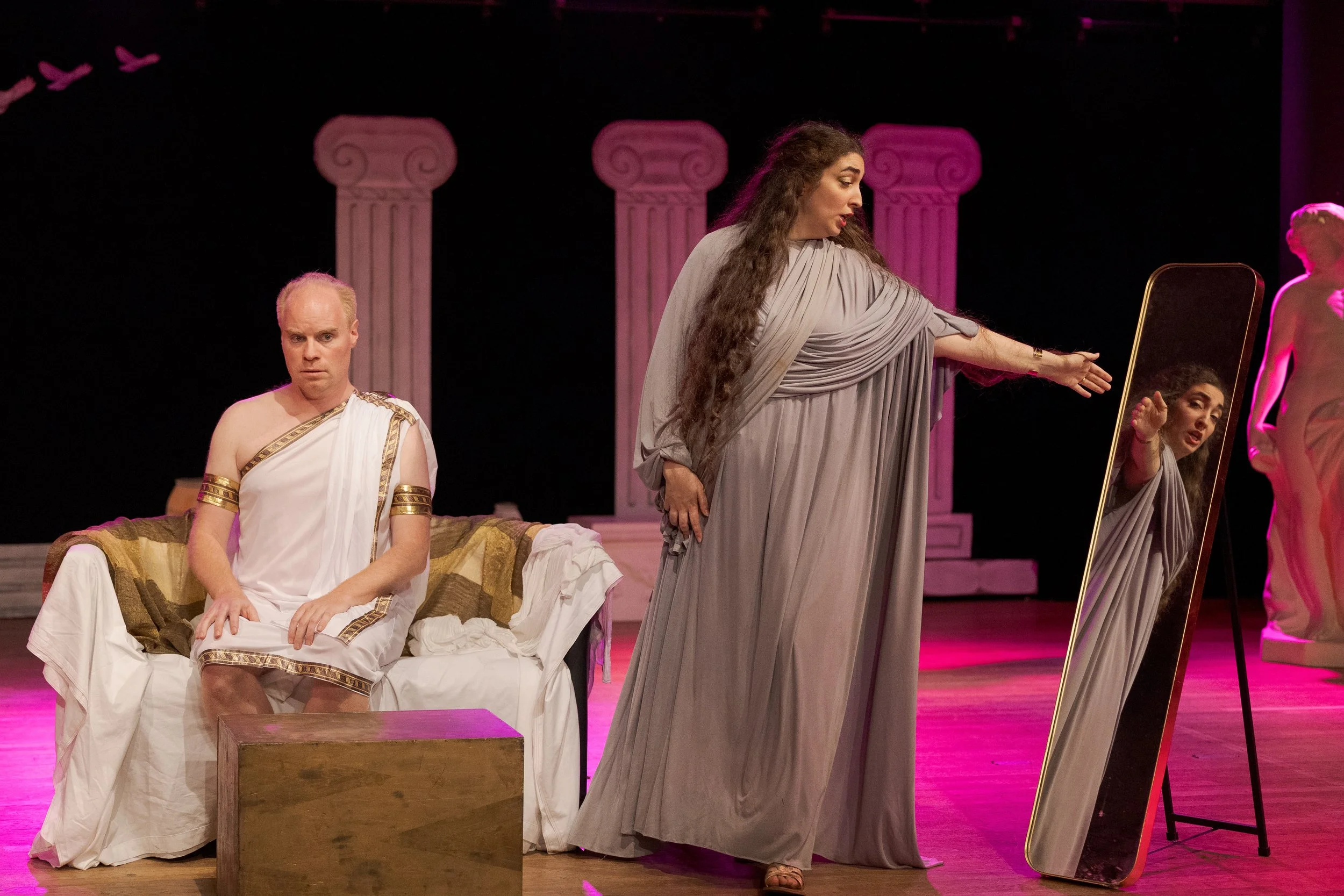
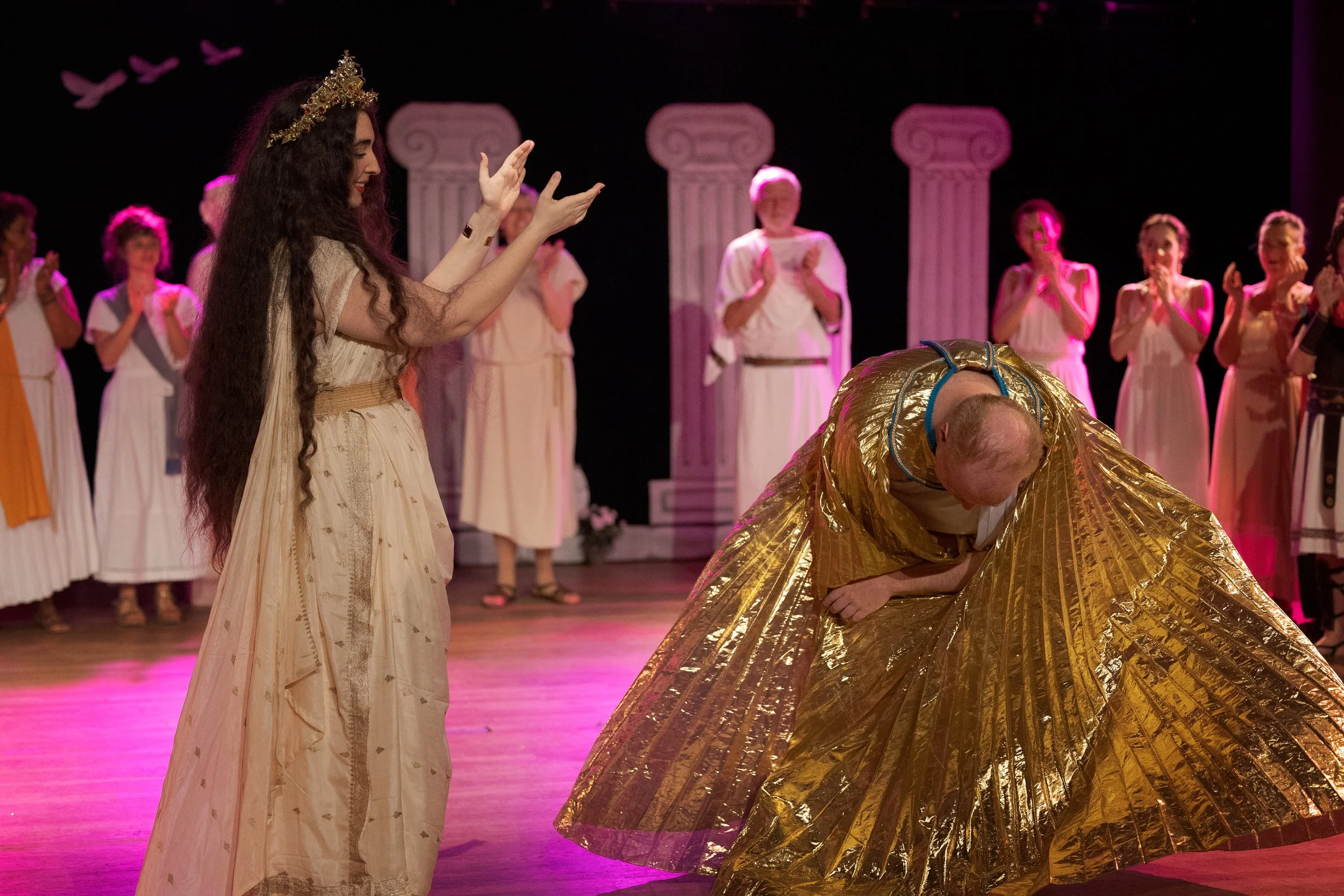
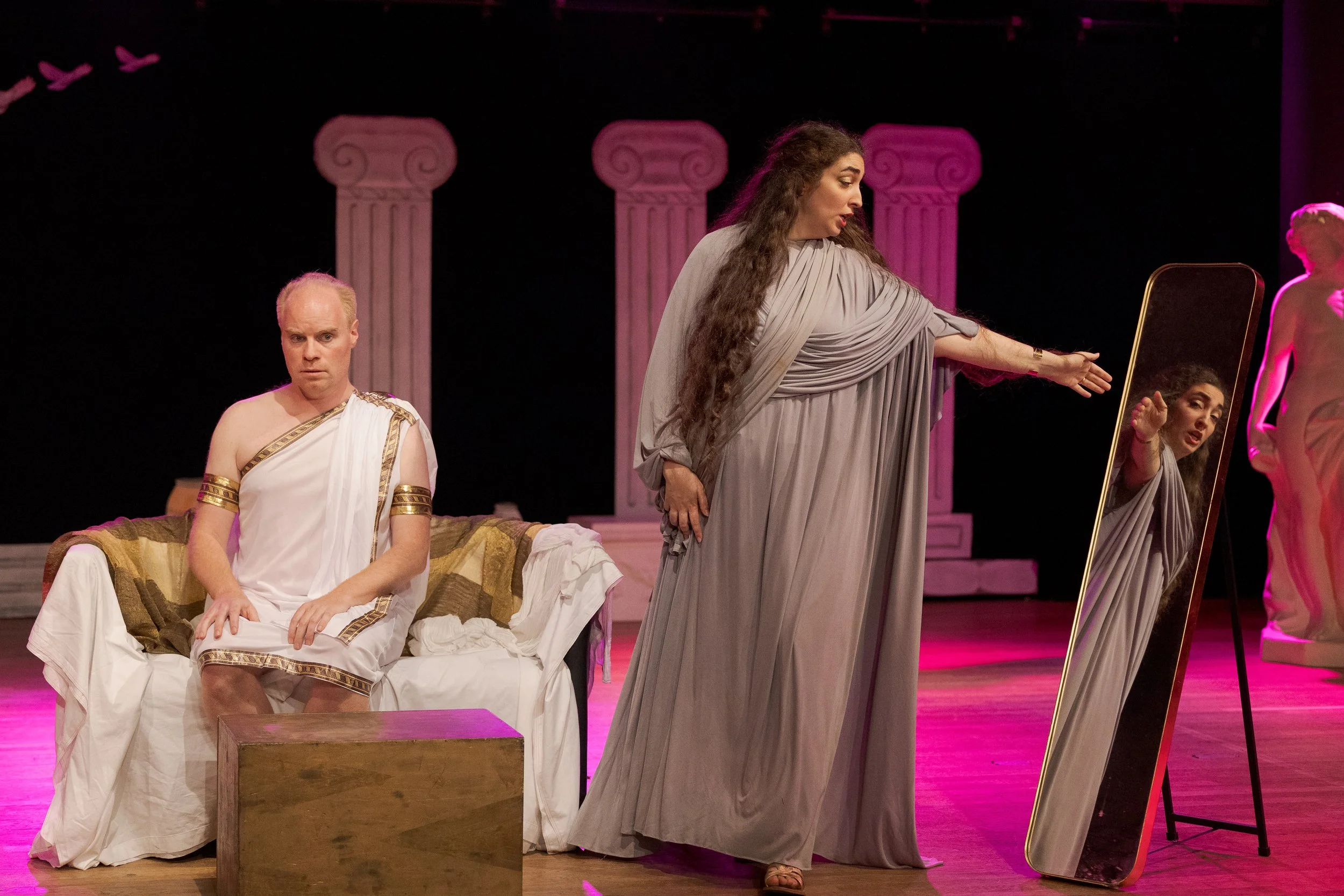
The production was staged by Clara Zammit, who also stepped into the role of Hélène that evening. She has extraordinary presence and a wonderful voice.
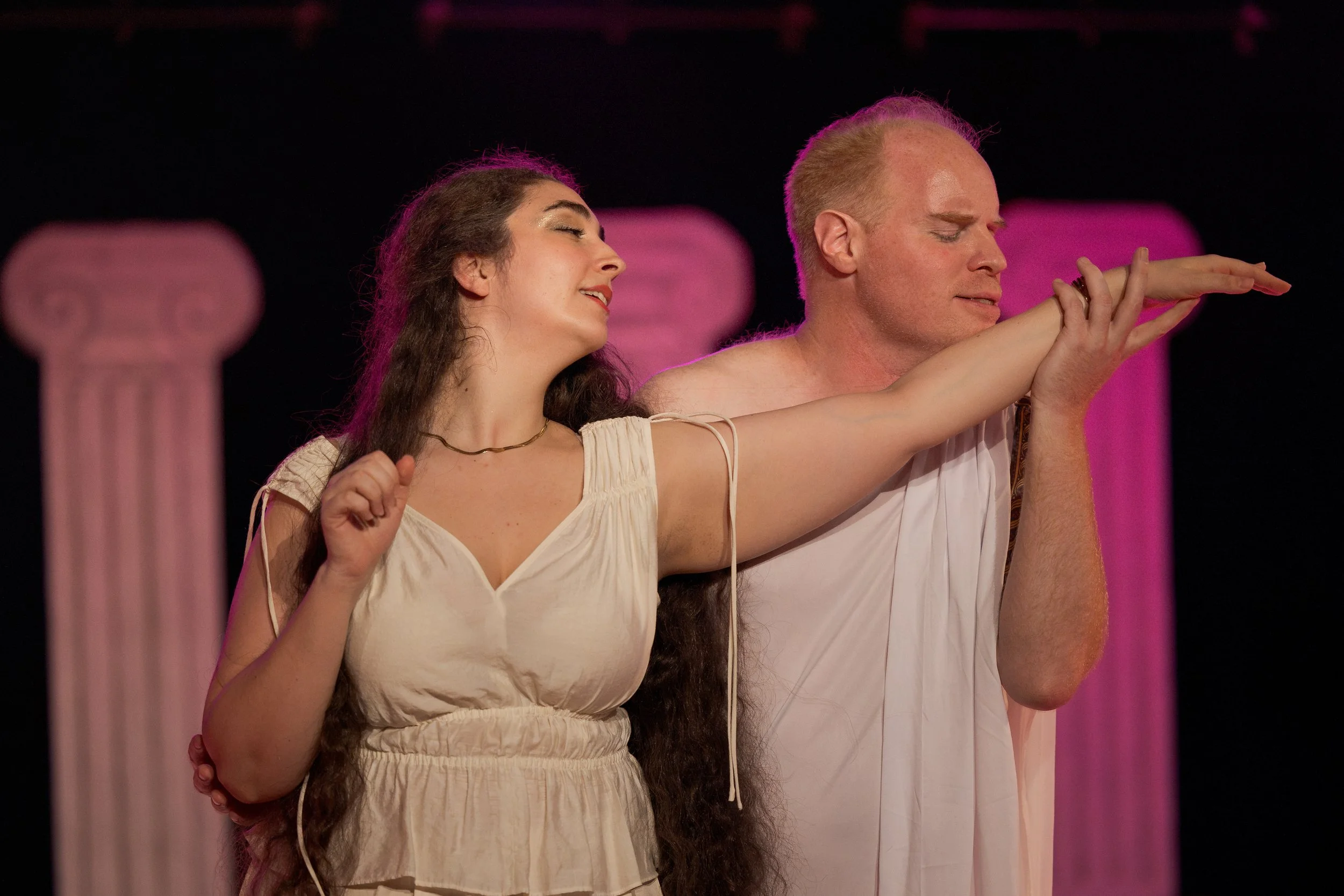
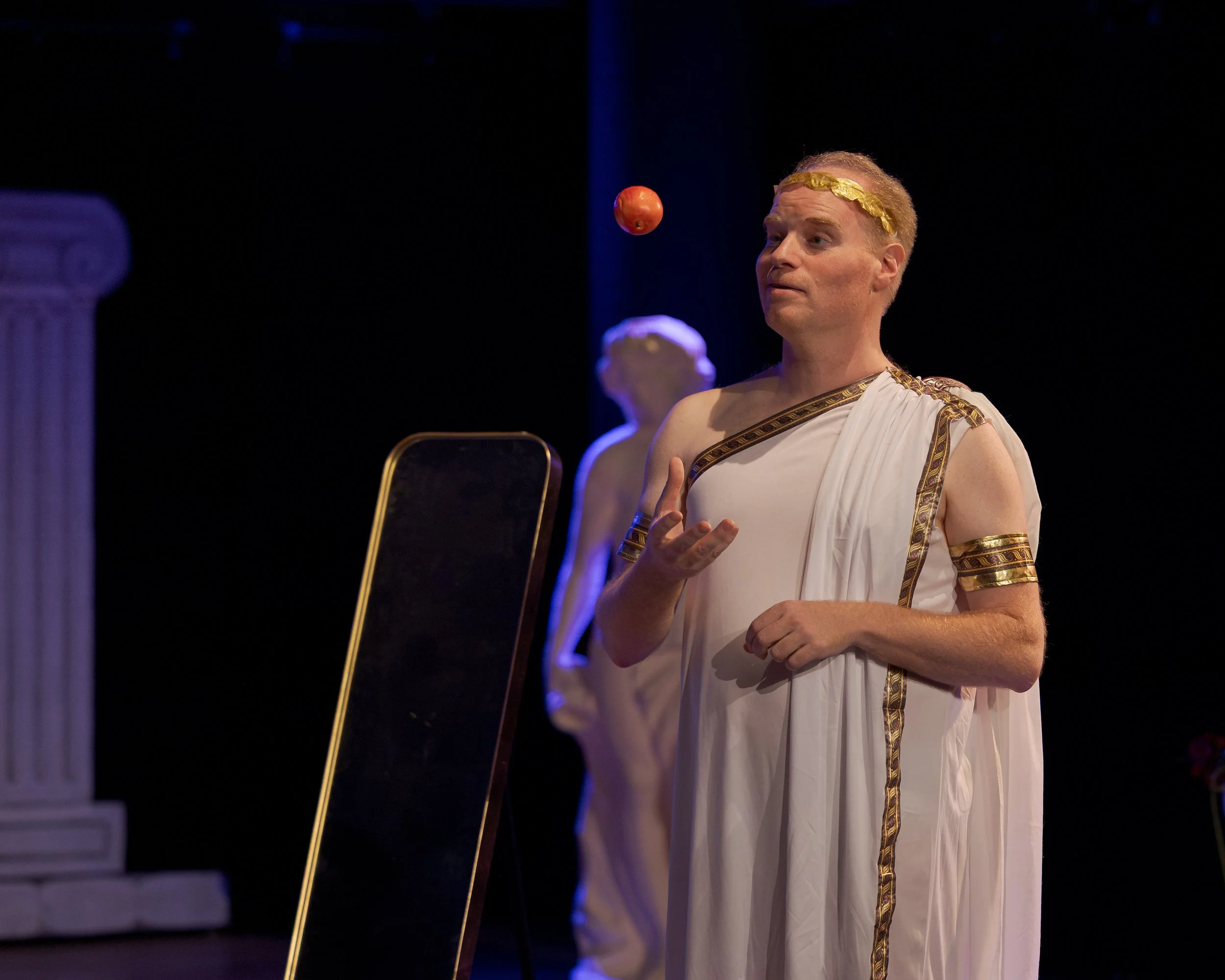
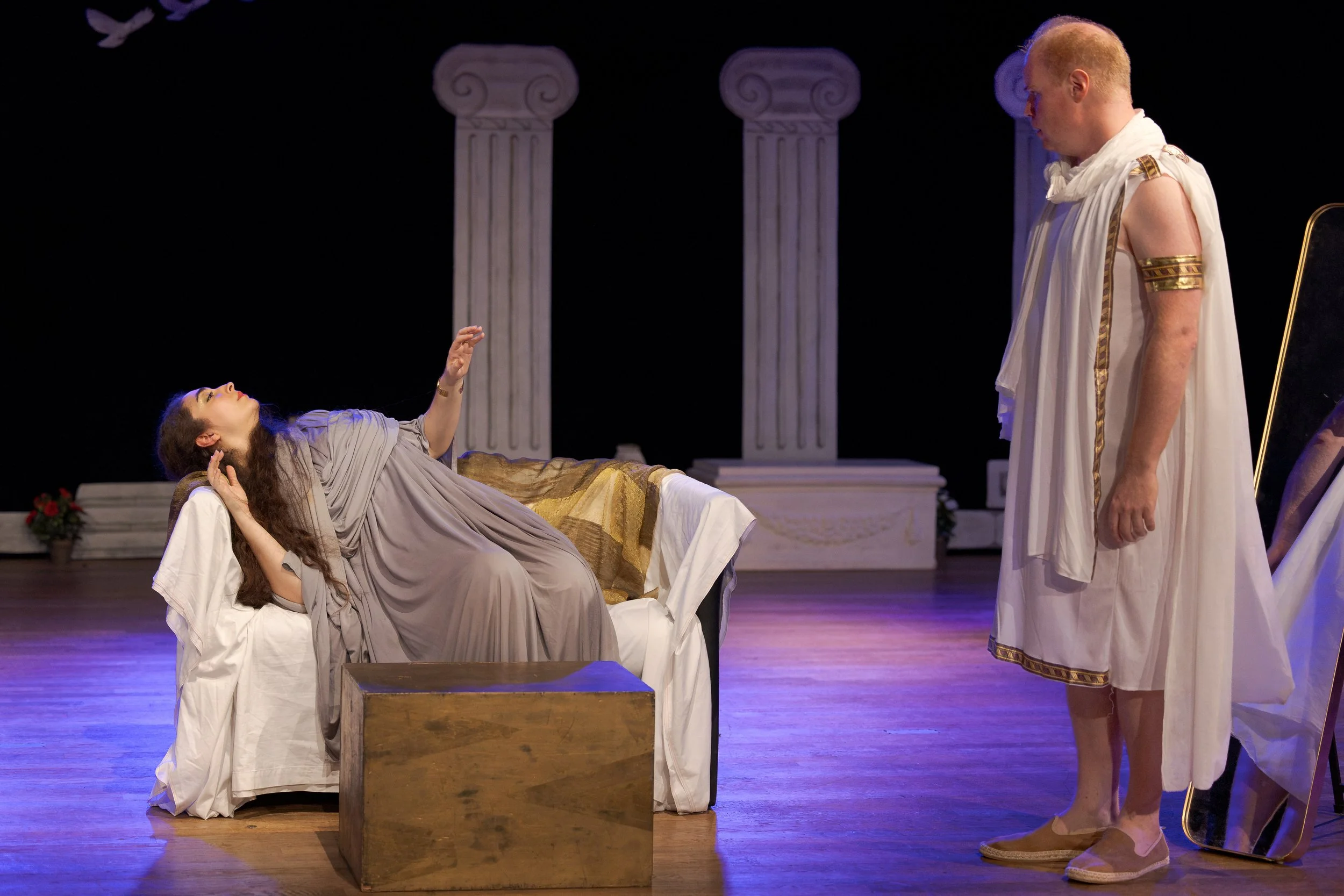
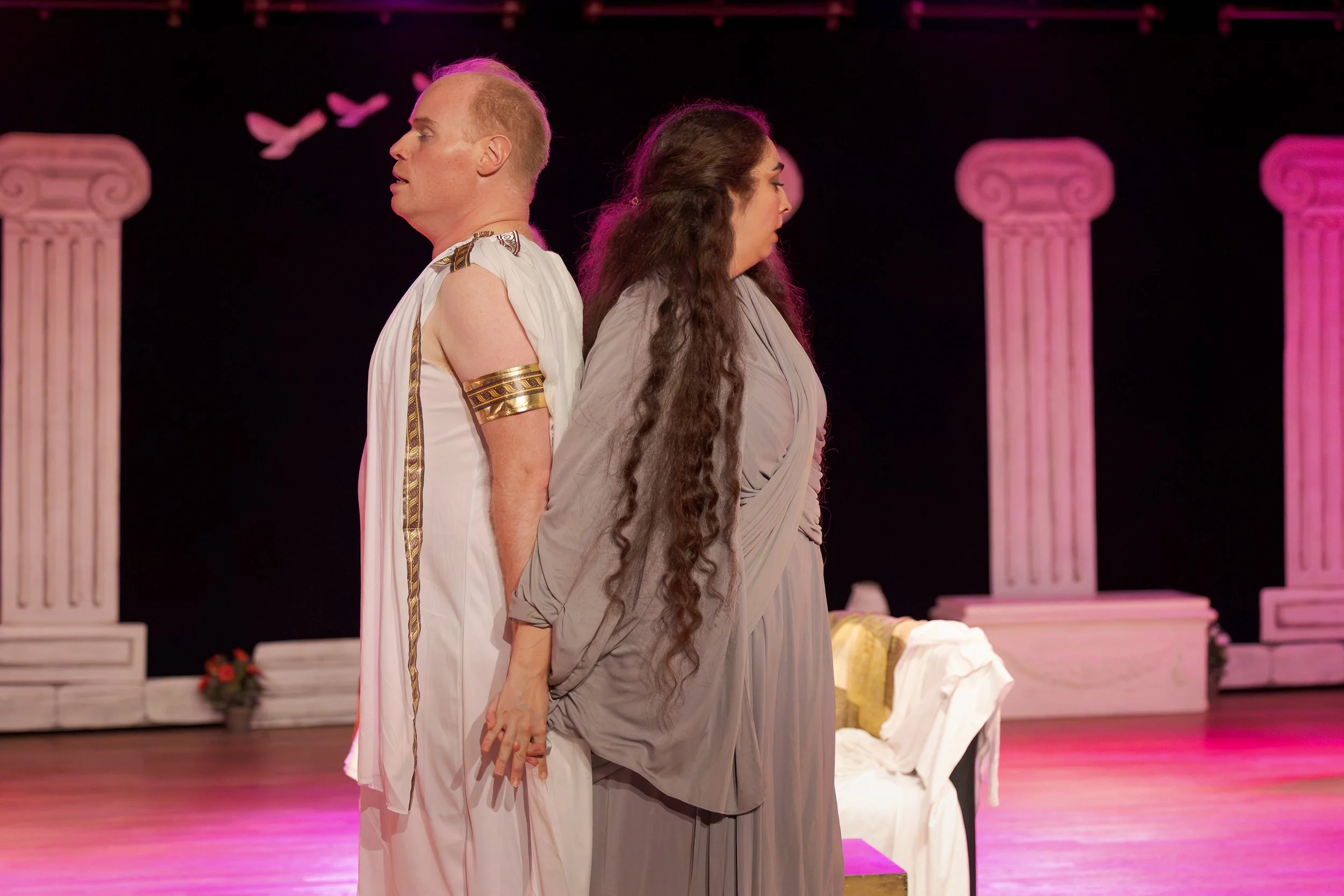
Around her, Pâris, Calchas, Ménélas, Agamemnon, the two Ajaxes, and the rest of the cast brought tremendous energy and character to the performance.
There were two photographers that evening, so we split the coverage between us. I concentrated on the closer images—the portraits, naturally my favorites.
The challenge is not missing a moment.
Everything happens so quickly: a gesture, a smile, the slightest change in expression. La Belle Hélène is an opéra-bouffe by Jacques Offenbach. The performers move, sing, react, seduce, argue, conspire. There are no second takes. The light changes, the performers move, and focus, exposure, and timing all have to adjust in real time.
And there I am, sitting in the middle of the third row, trying to catch as much of it as I possibly can.
It is hot. We are in June, and this year the heat waves have been relentless. My camera seems to be begging for mercy from time to time. So does my wrist, because I can barely put the camera down for a second.
But I follow them.
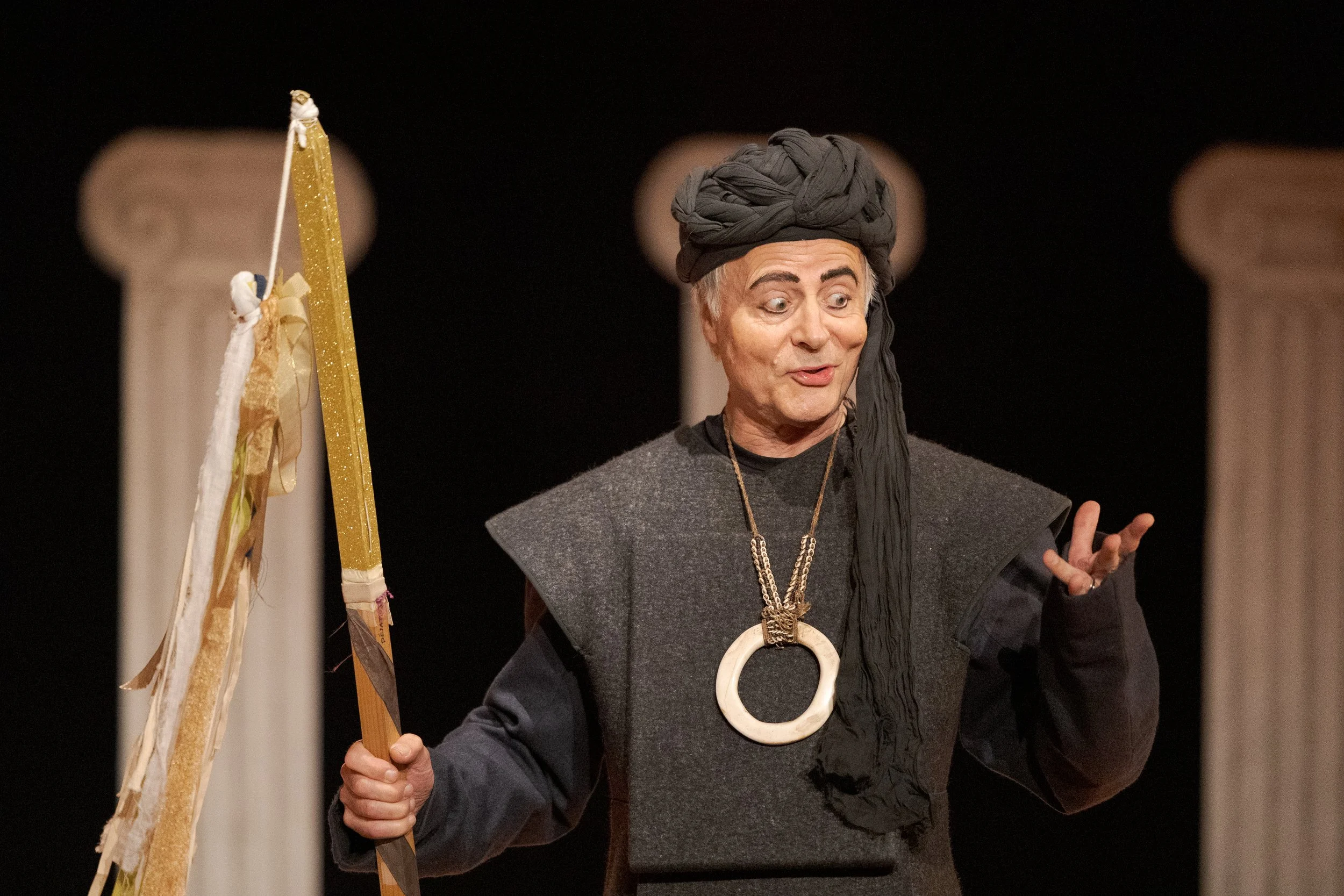
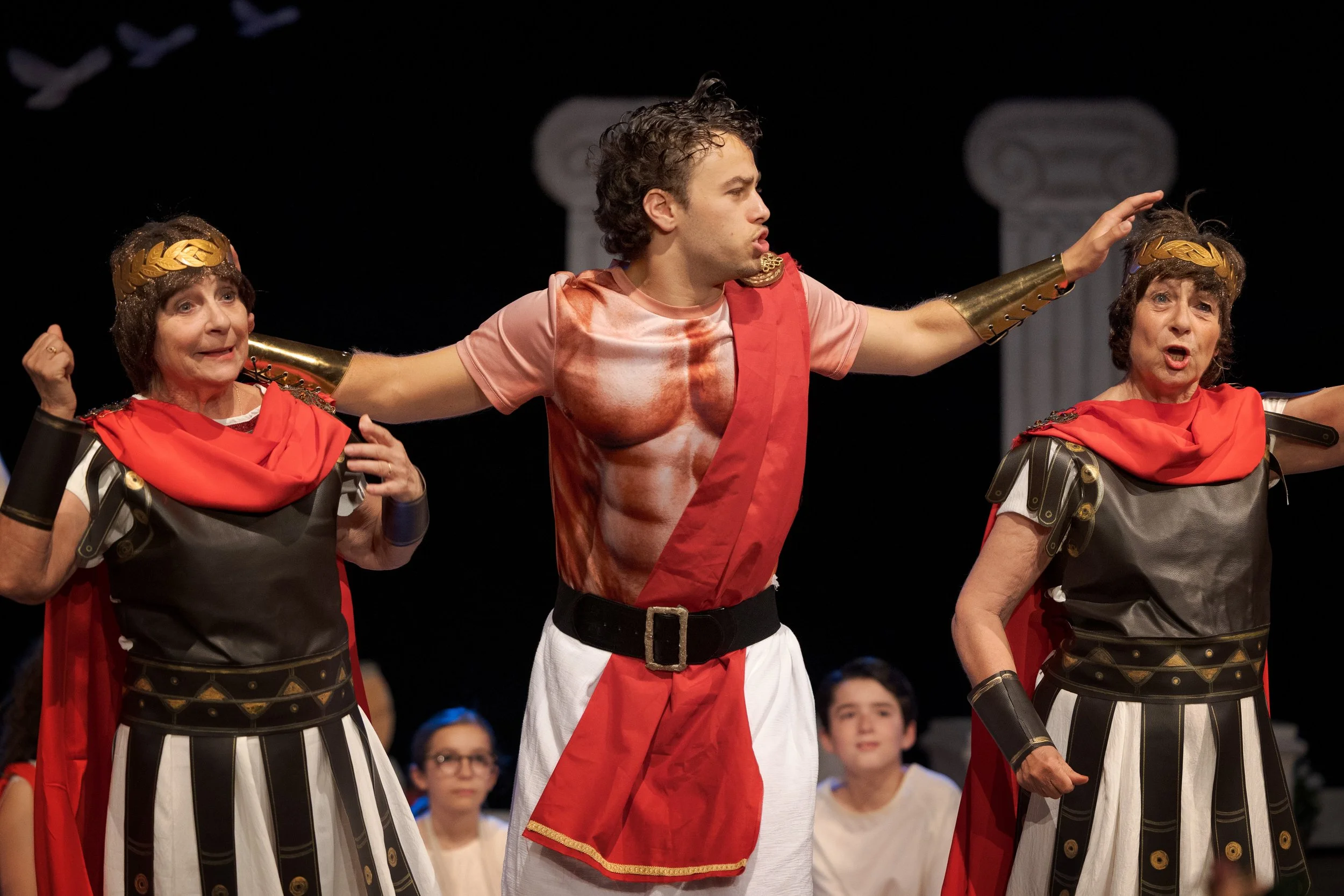
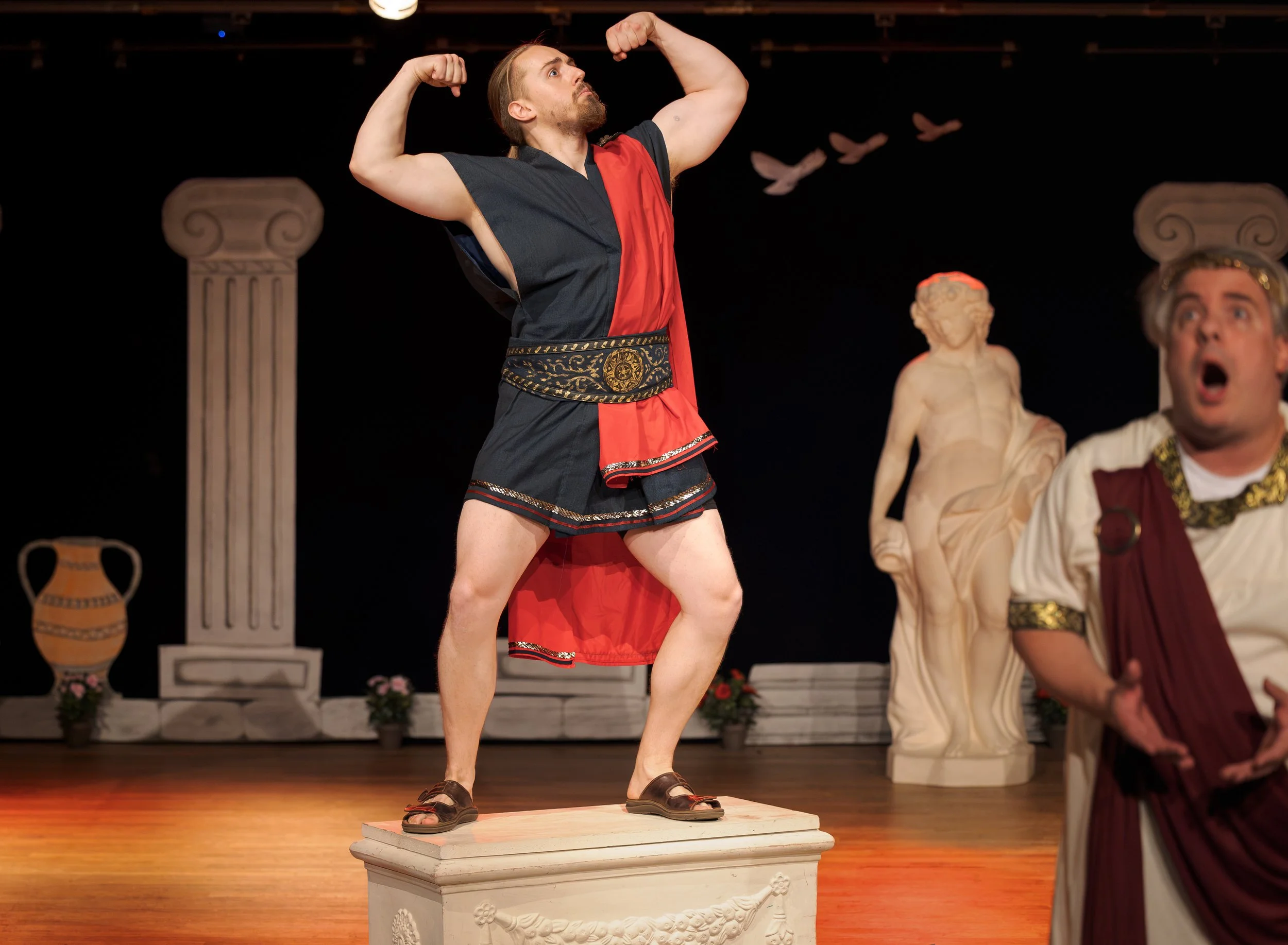
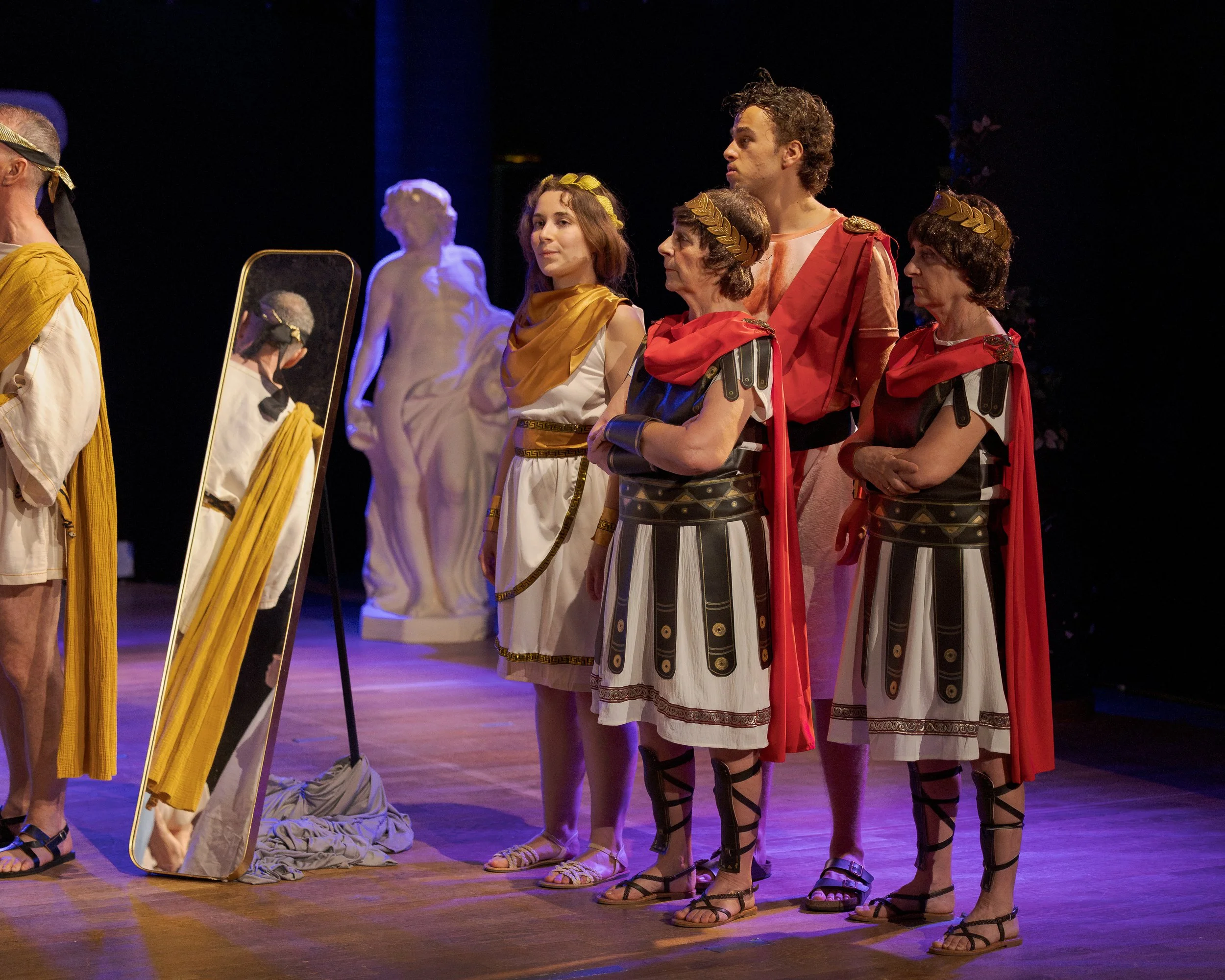
Everything is charming: the voices, the set, the lighting. The simplicity works beautifully.
I see cheerful crowds and intimate moments, a hilarious contest of wit, seduction, Pâris disguised as a shepherd, kings and servants, absurdity and tenderness. Somehow, it all works.
And this is one of the things I love about Paris—the city, not the character. Thoughtful, creative, beautiful productions made by people at different levels of experience who work hard, take risks, and make themselves vulnerable in front of an audience.
For a photographer, it is impossible not to be drawn in.
La Belle Hélène
Photographier La Belle Hélène d’Offenbach au Conservatoire du 11e à Paris — une soirée pleine de musique, de théâtre, de portraits et de moments fugaces sur scène.
EN / FR
Je suis assise au bord de mon siège, absorbée par chaque scène, chaque note de musique.
C’est exactement ce que j’ai ressenti en photographiant La Belle Hélène au Conservatoire du 11ème arrondissement de Paris, en juin dernier. J’ai souri pendant presque toute la représentation, charmée par une production réunissant chanteurs et comédiens, professionnels et non professionnels.
La mise en scène était signée Clara Zammit, qui a également interprété le rôle d’Hélène ce soir-là. Elle a une présence extraordinaire et une voix magnifique.
Autour d’elle, Pâris, Calchas, Ménélas, Agamemnon, les deux Ajax et le reste de la troupe ont apporté à la représentation une énergie et un caractère formidables.
Nous étions deux photographes ce soir-là, et nous nous sommes donc partagé la couverture du spectacle. Je me suis concentrée sur les images plus rapprochées — les portraits, naturellement mes préférés.
Le défi, c’est de ne rien manquer.
Tout va si vite : un geste, un sourire, le moindre changement d’expression. La Belle Hélène est un opéra-bouffe de Jacques Offenbach. Les interprètes bougent, chantent, réagissent, séduisent, se disputent, conspirent. Il n’y a pas de deuxième prise. La lumière change, les artistes se déplacent, et la mise au point, l’exposition et le timing doivent s’adapter en temps réel.
Et me voilà, assise au milieu du troisième rang, essayant de saisir autant de choses que possible.
Il fait chaud. Nous sommes en juin, et cette année les vagues de chaleur ont été incessantes. De temps en temps, mon appareil semble lui aussi demander grâce. Mon poignet également, car je peux à peine poser l’appareil une seconde.
Mais je les suis.
Tout est charmant : les voix, le décor, la lumière. La simplicité fonctionne merveilleusement bien.
Je vois des scènes de foule joyeuses et des moments intimes, une hilarante joute d’esprit, de la séduction, Pâris déguisé en berger, des rois et des serviteurs, de l’absurde et de la tendresse. Et, d’une manière ou d’une autre, tout fonctionne.
Et c’est l’une des choses que j’aime à Paris — la ville, pas le personnage. Des productions sensibles, créatives et belles, portées par des personnes aux niveaux d’expérience différents, qui travaillent dur, prennent des risques et acceptent de se rendre vulnérables devant un public.
Pour une photographe, il est impossible de ne pas se laisser entraîner.
Sadie & Co.
A quiet family session with seven-month-old Sadie — documenting the small moments, laughter, curiosity, feeding breaks, and tenderness that make early parenthood unforgettable.
Here I am, lying on the floor, as low as I can go, camera in one hand while the other waves gently in the air, trying to capture Sadie’s attention. It’s difficult to stay perfectly steady because every few seconds, she bursts into another smile and I want to laugh with her.
Seven months old and already eager to explore the world.
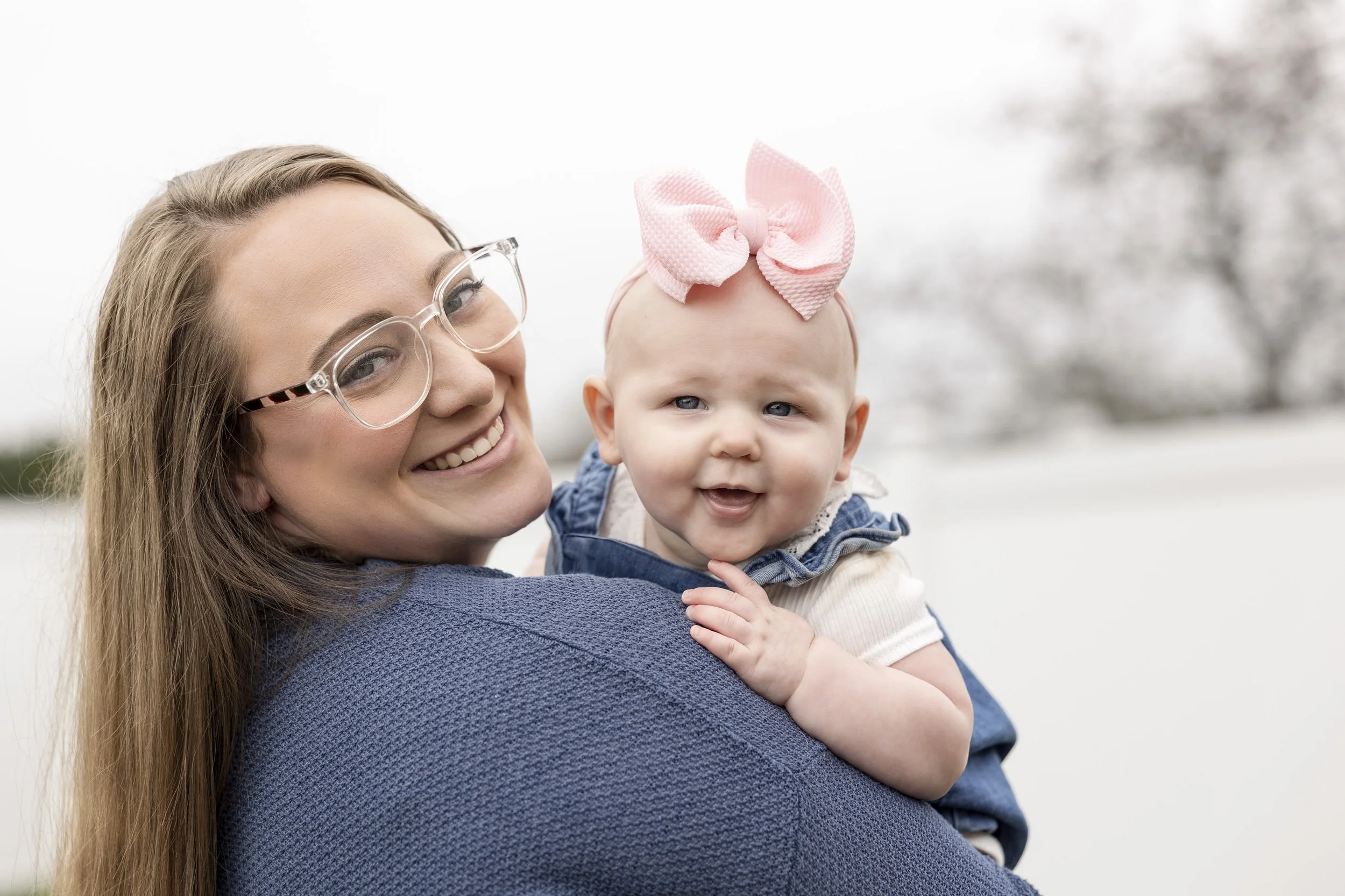
She is seven months old — that beautiful age when babies are deeply curious about the world, yet still completely wrapped in the safety of their parents’ arms.
Curious about absolutely everything. Including the camera.
There comes a moment, inevitably, when she decides the photoshoot must pause for something far more important: lunch.
I keep photographing.
There is something quietly moving about watching a baby hold her bottle with complete determination while her mother looks on with that mixture of calm attention and tenderness that defines early motherhood. These are often the moments parents remember most vividly later on — not perfection, but care, routine, and closeness.
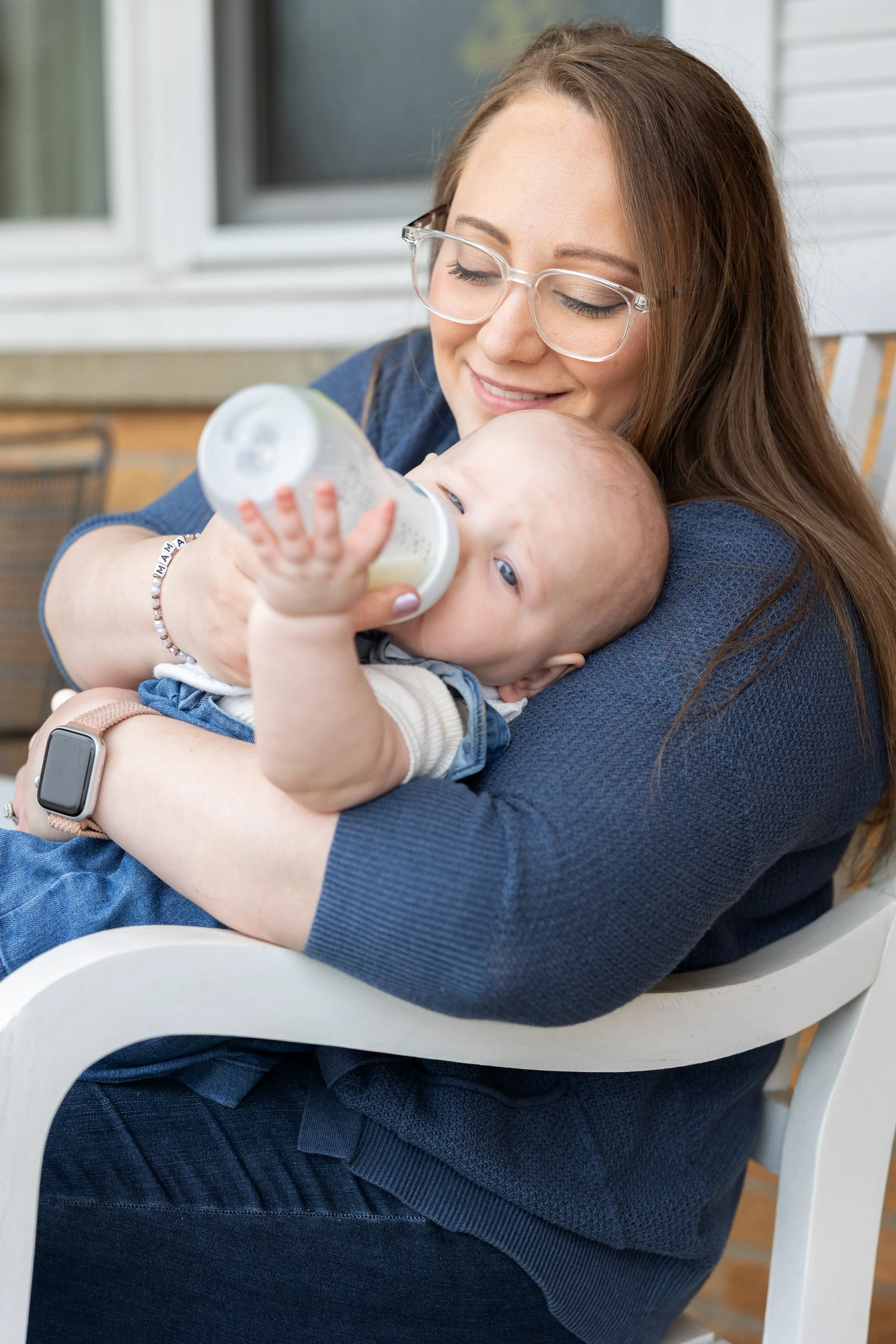
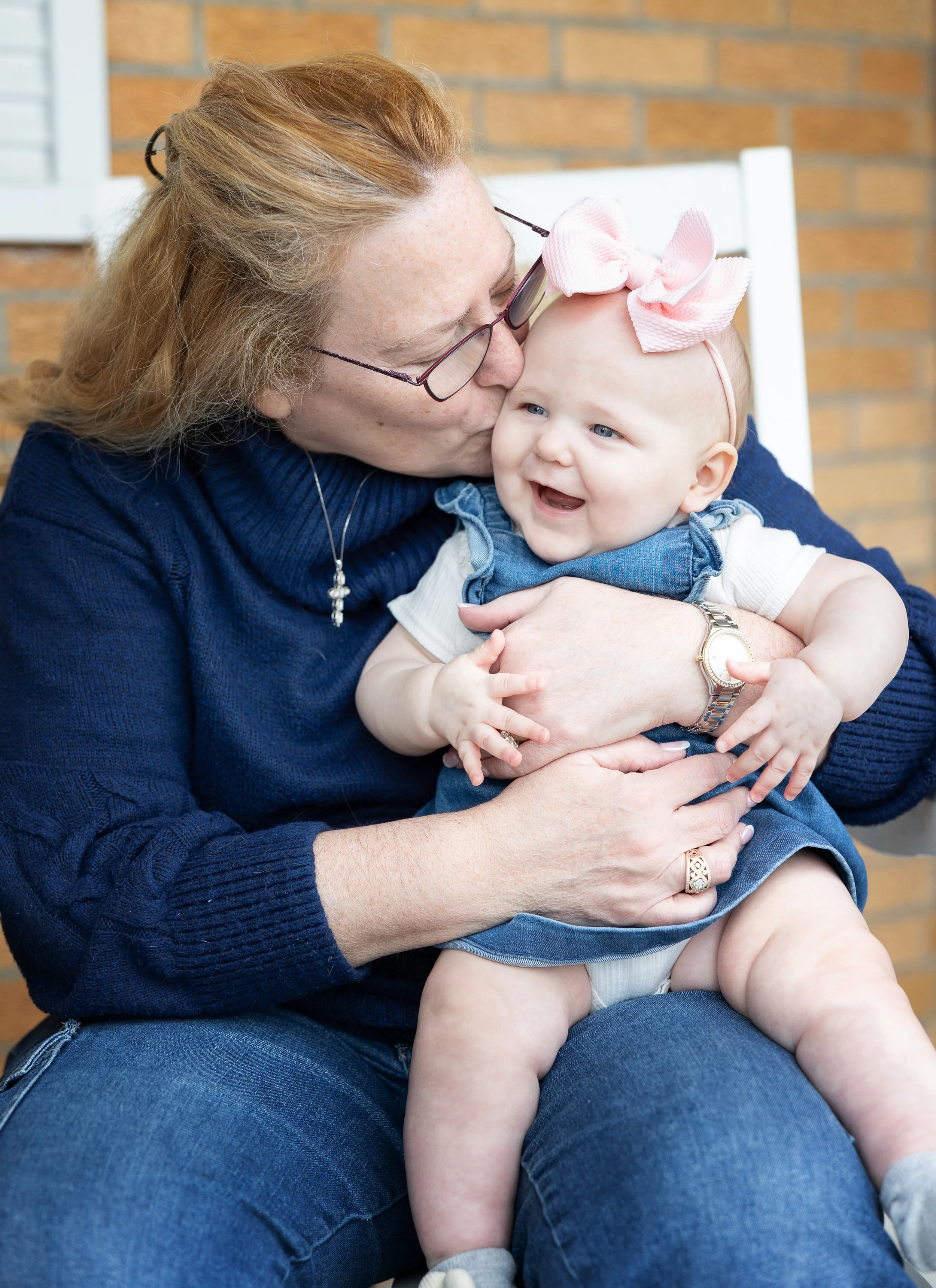
Outside, everything becomes fascinating. Trees, birds, movement, light. Even before walking begins, there is already such a visible desire to explore. Babies lean toward life with their entire body.
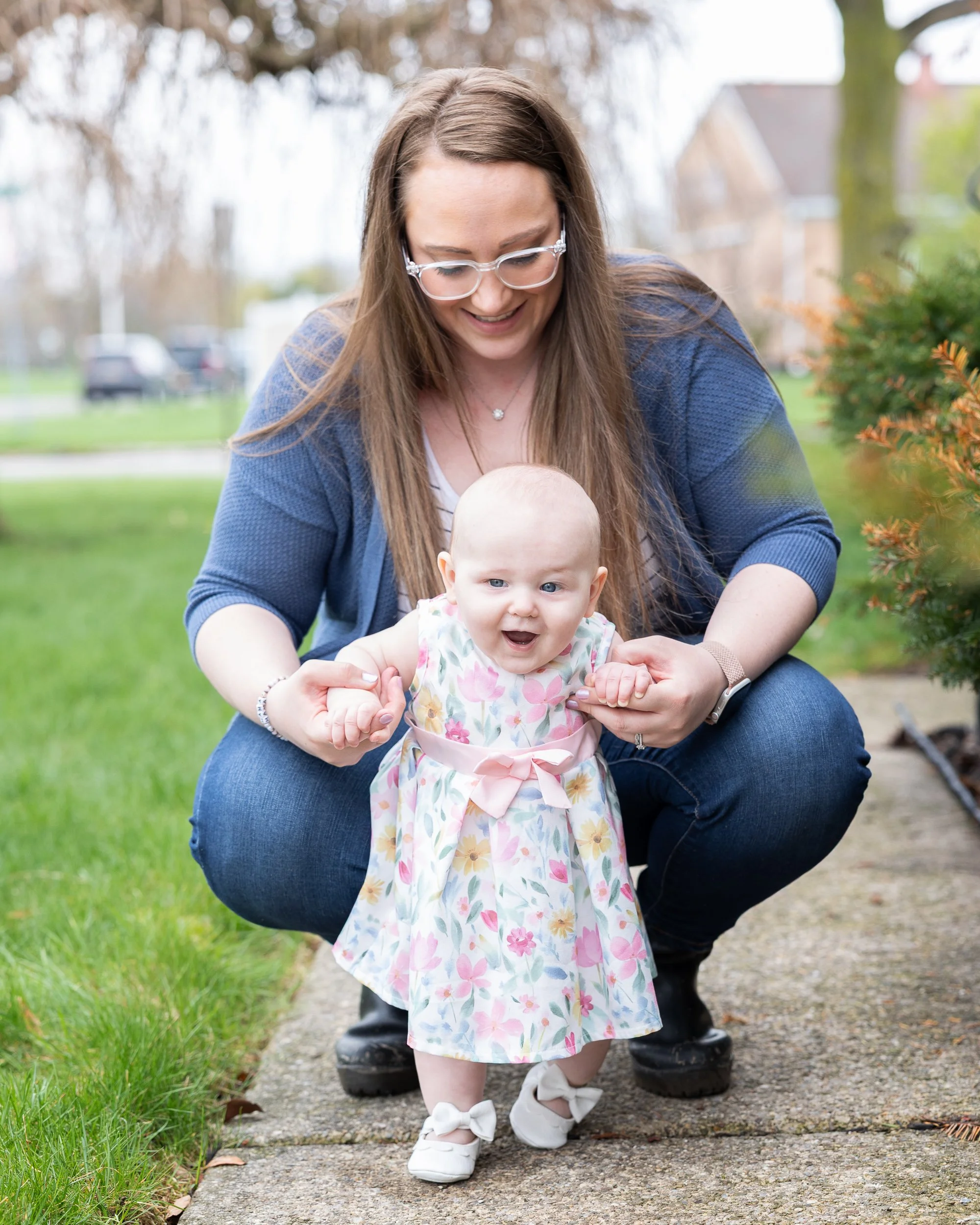
At seven months old, even standing still feels like an adventure.
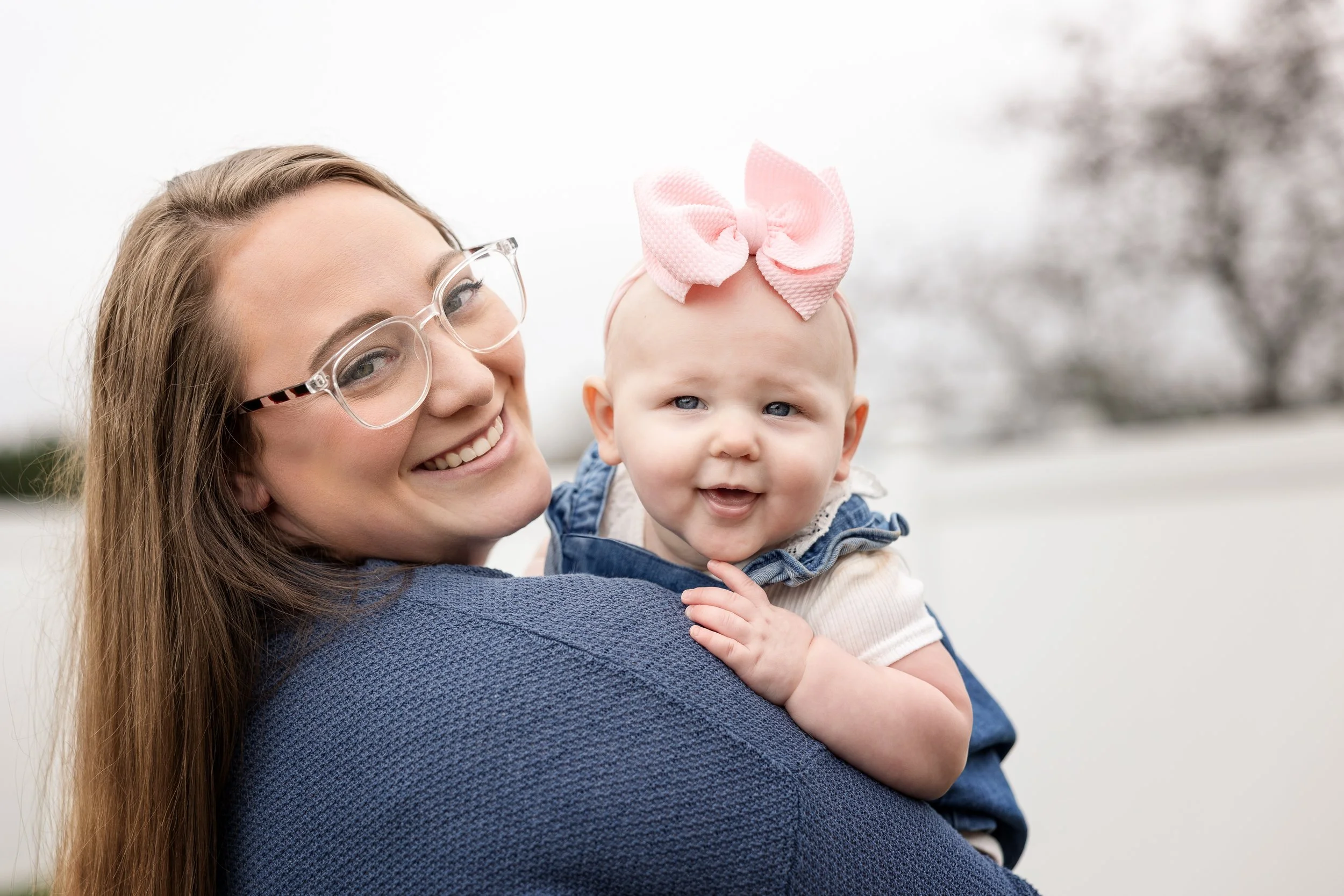
A quick glance over her mother’s shoulder, halfway between curiosity and mischief.
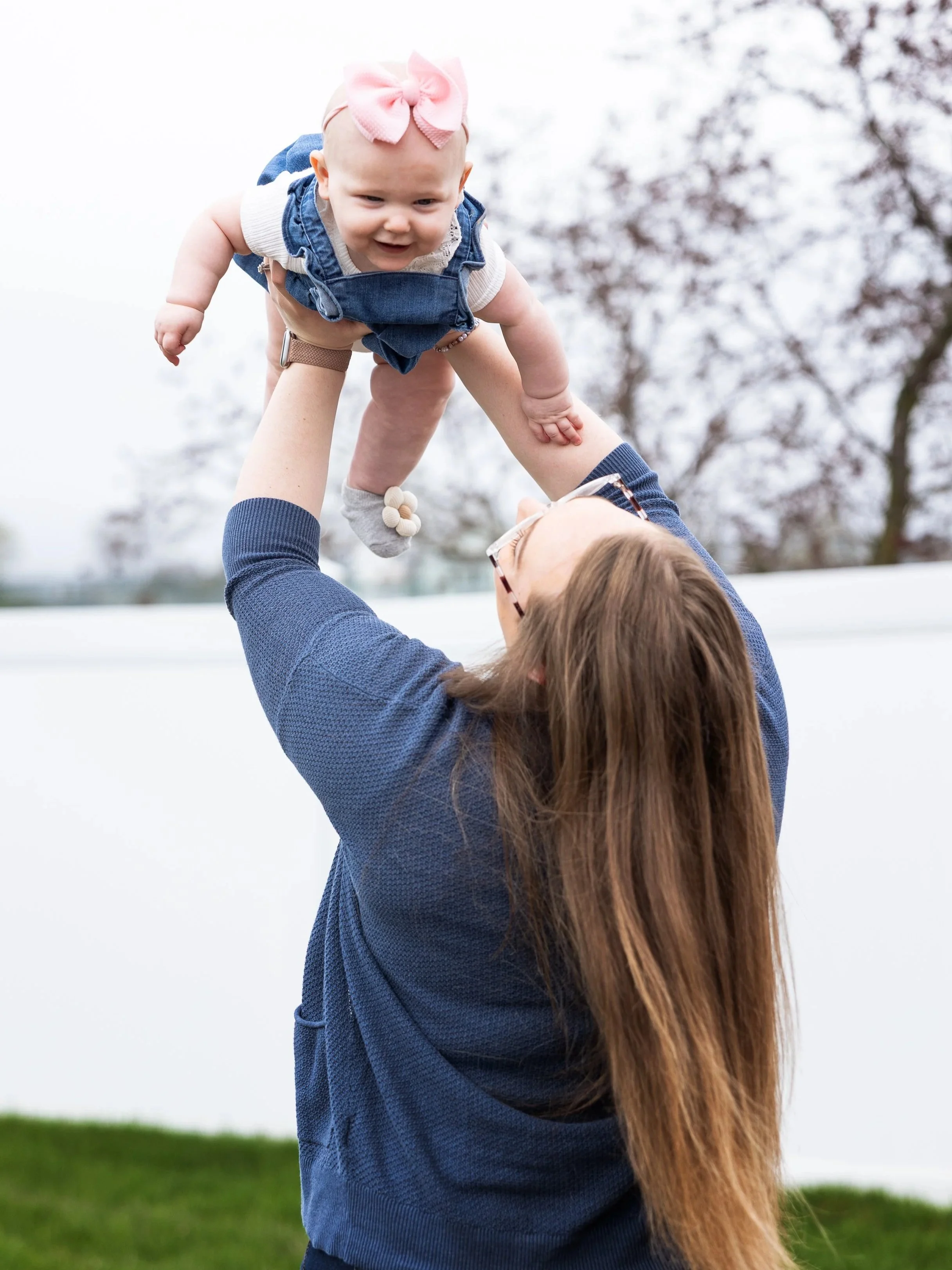
For a few seconds, the whole world is sky.
Then Daddy comes home.
Suddenly, the world becomes even more exciting. He arrives carrying the cat, who very clearly disagrees with participating in the session and spends the next few minutes attempting an escape while Sadie watches in delight.
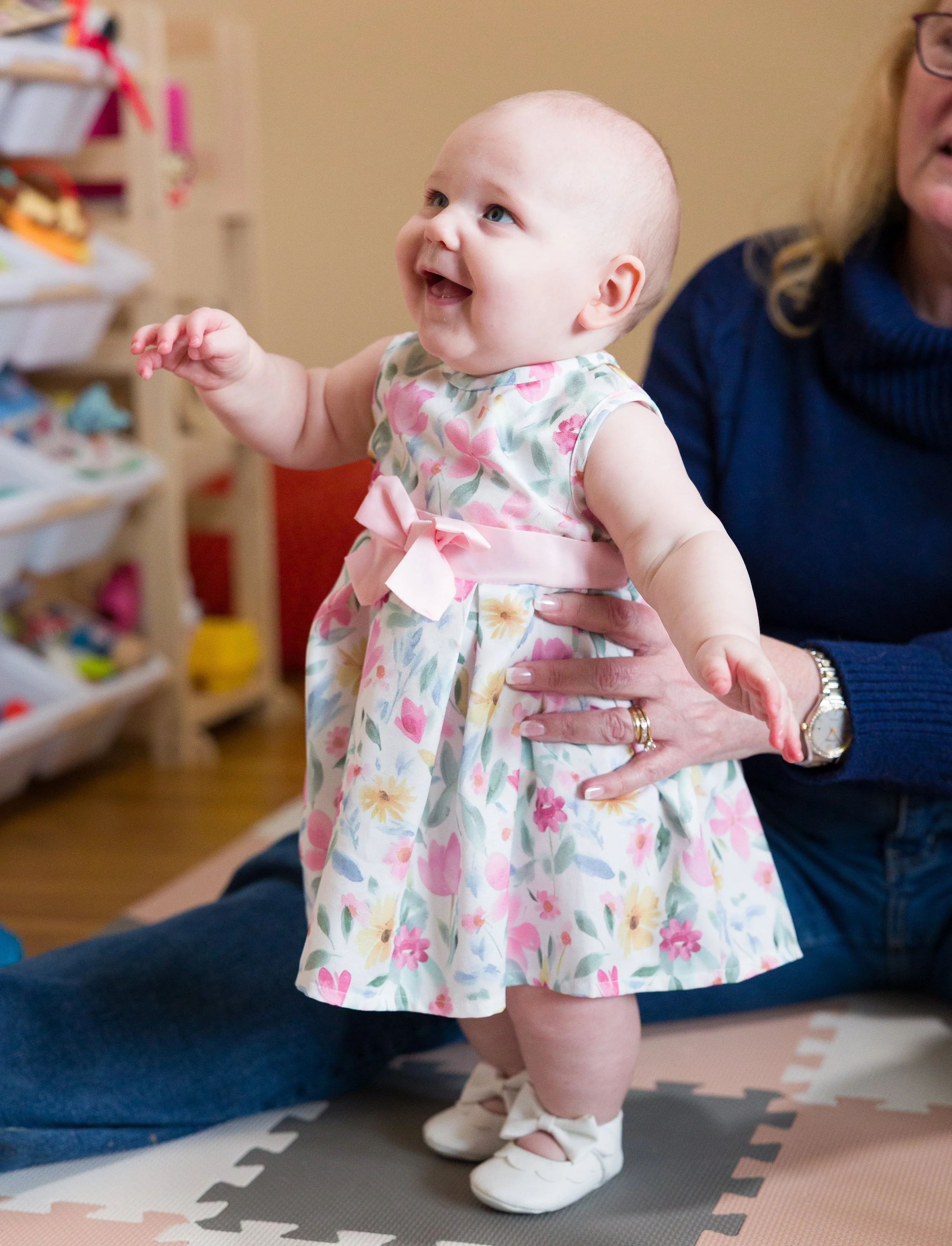
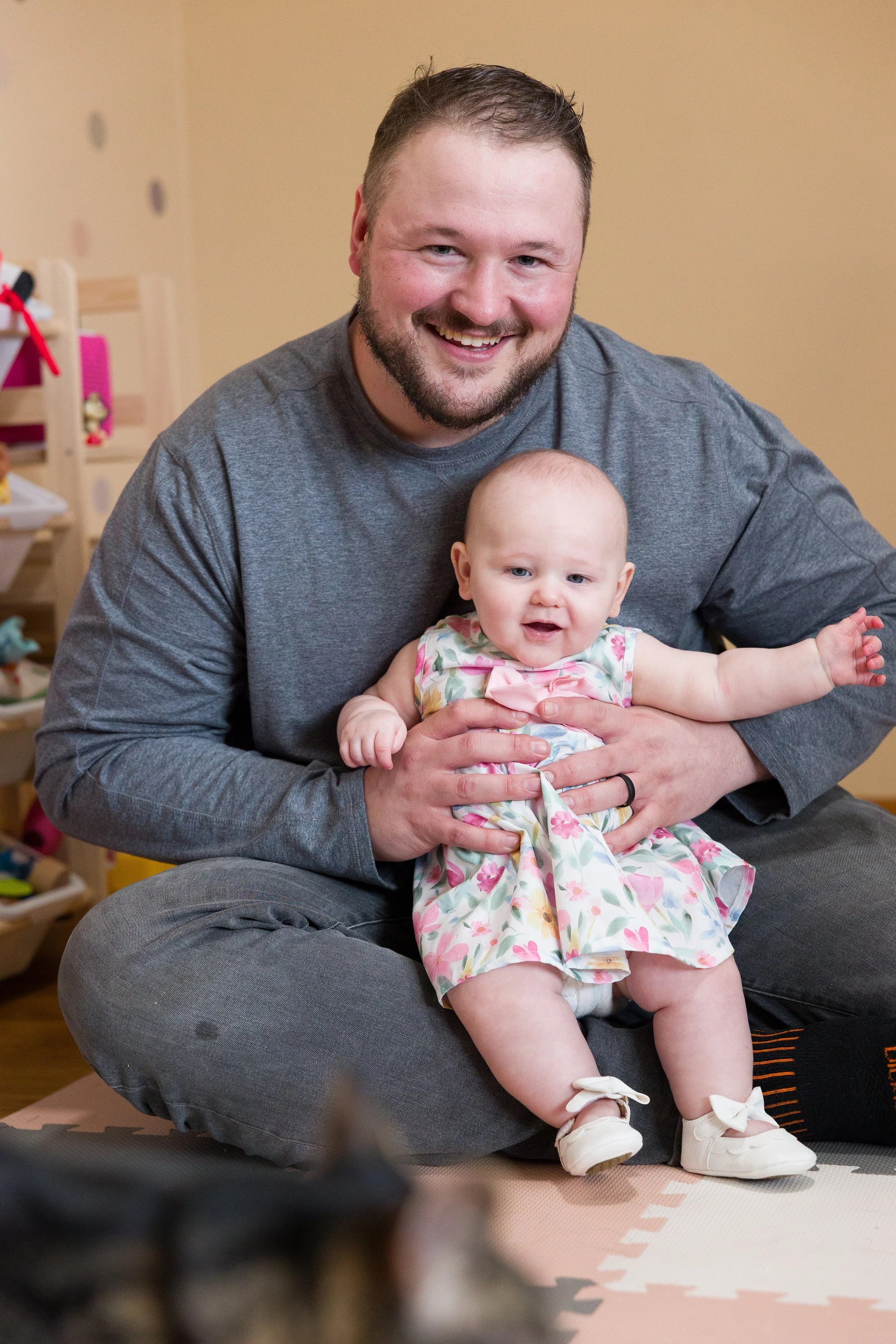
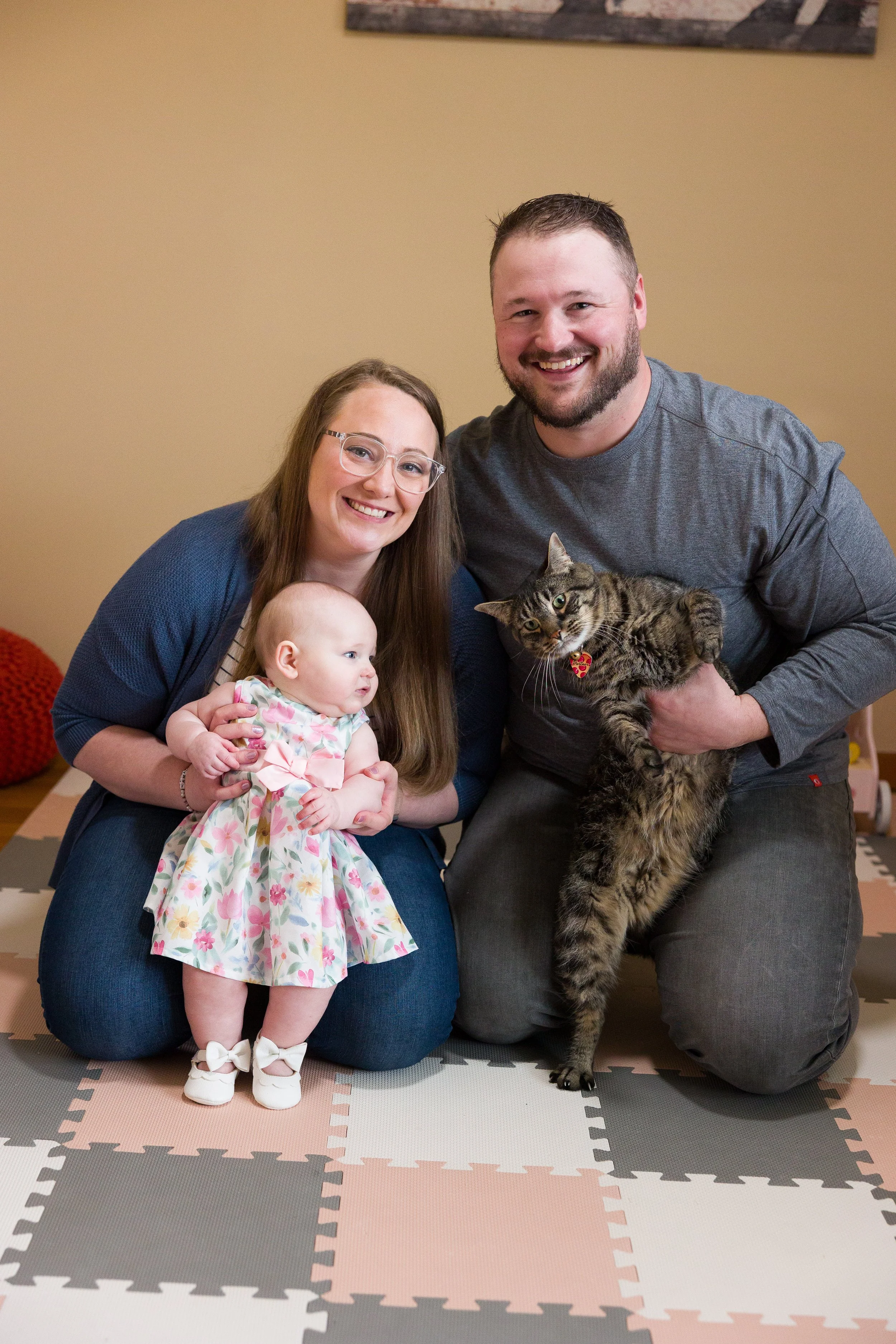
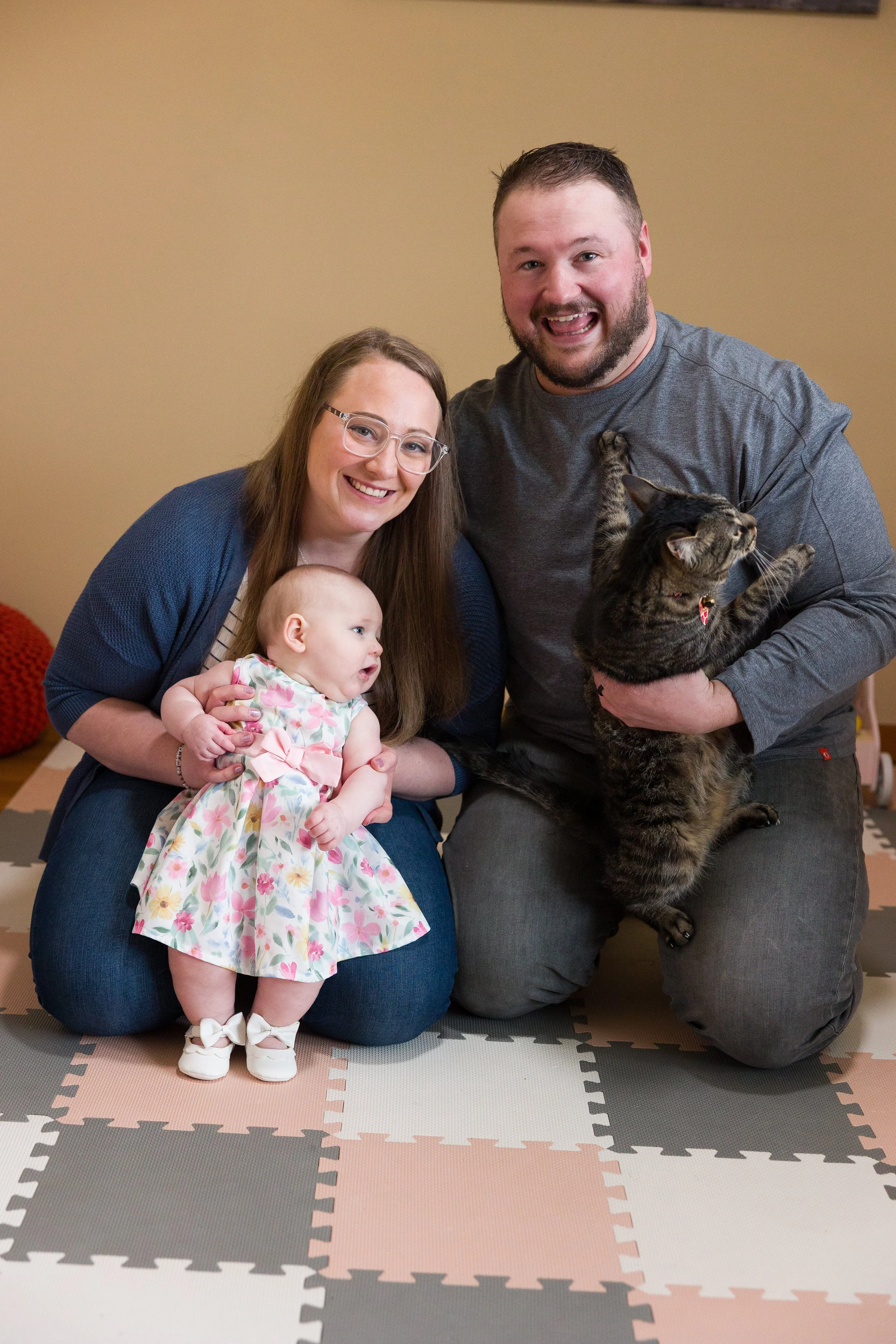
Sessions like this are rarely static. They unfold naturally — feeding breaks, little moments of tiredness, sudden bursts of laughter, brief pauses for comfort. That rhythm is part of what makes photographing families with young children so meaningful.
At seven months old, babies change almost week by week. Soon, Sadie will be walking, exploring, climbing, and running toward whatever catches her attention next. Capturing these quieter in-between moments before that transition feels especially precious.
One thing parents need to know: don’t worry if your baby needs to eat, rest, or fall asleep during the session. Some of the most beautiful photographs happen precisely in those moments.
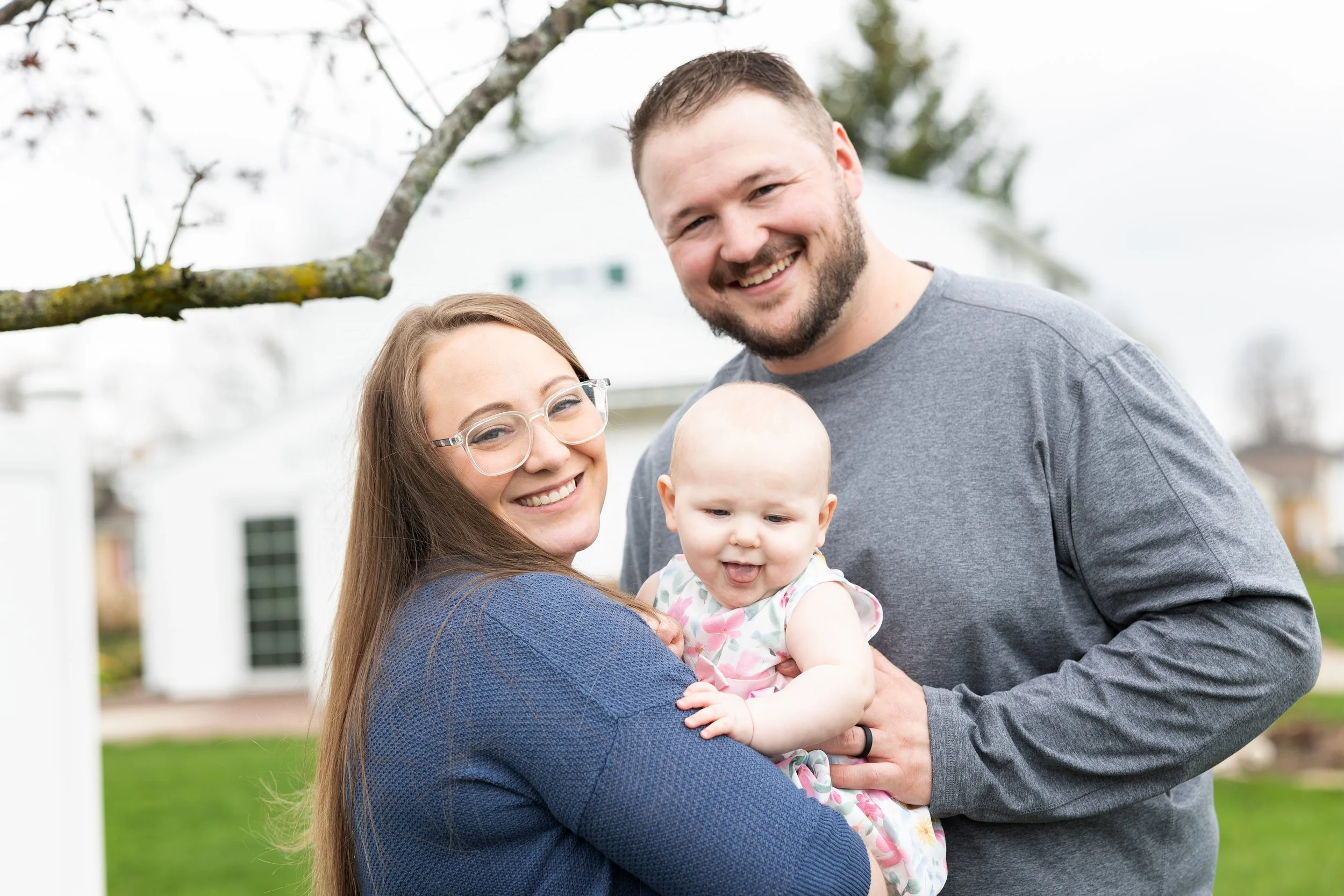
A small family moment, full of movement, laughter, and love.
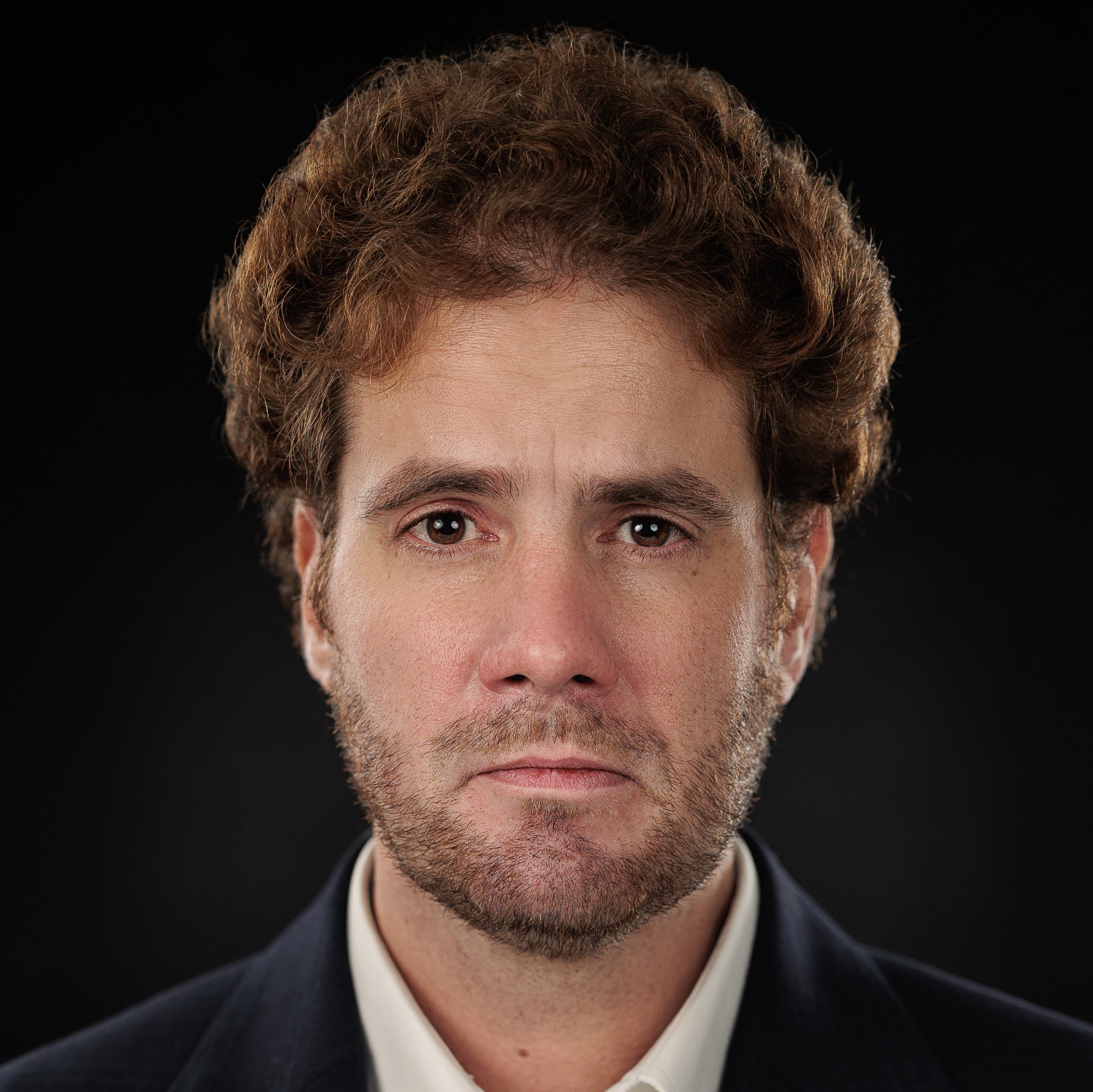
From the Stage to the Still: Photographing Niccolò Rigutto
A portrait session in Paris with actor, pianist, and theatre teacher Niccolò Rigutto. An exploration of stillness, presence, and the quiet psychology behind revealing a person in front of the camera.
One of the surprising facts about actors is how often they are, in real life, quite shy. That contrast — between someone trained to reveal emotion on stage and someone reticent in front of a camera — is part of what makes portrait photography fascinating.
In my photography practice — whether it’s museums, antique stores, architecture, or people — what I’m always trying to do is reveal beauty. A piece of furniture has a sweet spot where its form, texture, and light make it sing. A monument has it too. Portraiture isn’t different in that regard, except that there’s this added ingredient: psychology.
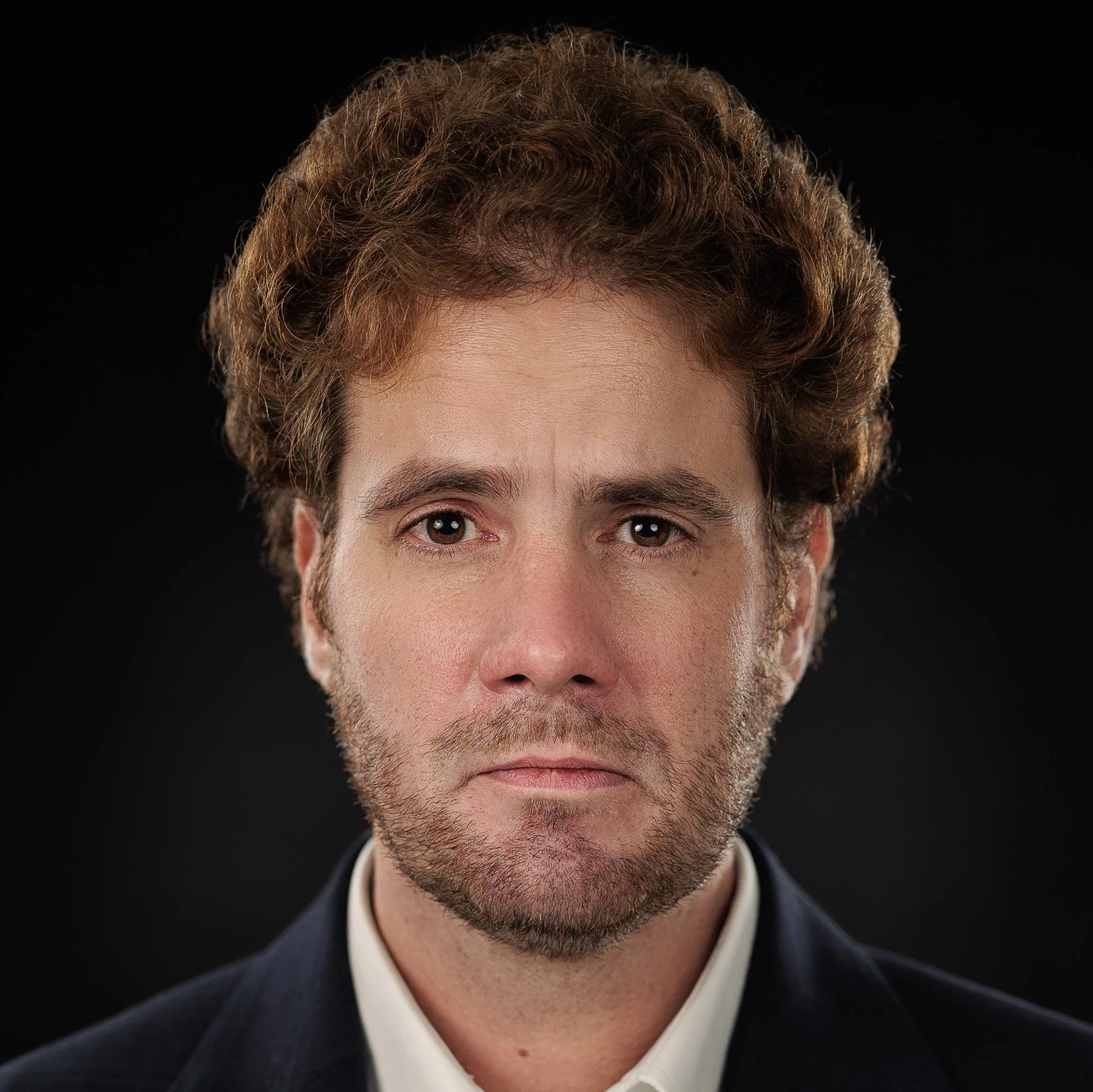
I don’t know about you, but I always hated being photographed when I was younger. I still do — a little. And more often than not, people I’ve photographed have said something like:
“The photo is great — it’s just the subject who sucks.”
That’s where the challenge begins.
And it was with this mindset that Niccolò Rigutto came into the studio.
My goal isn’t to take a “nice picture.” It’s to go from:
“Too bad I’m the subject of the photo,”
to:
“Wait… is that really me???”
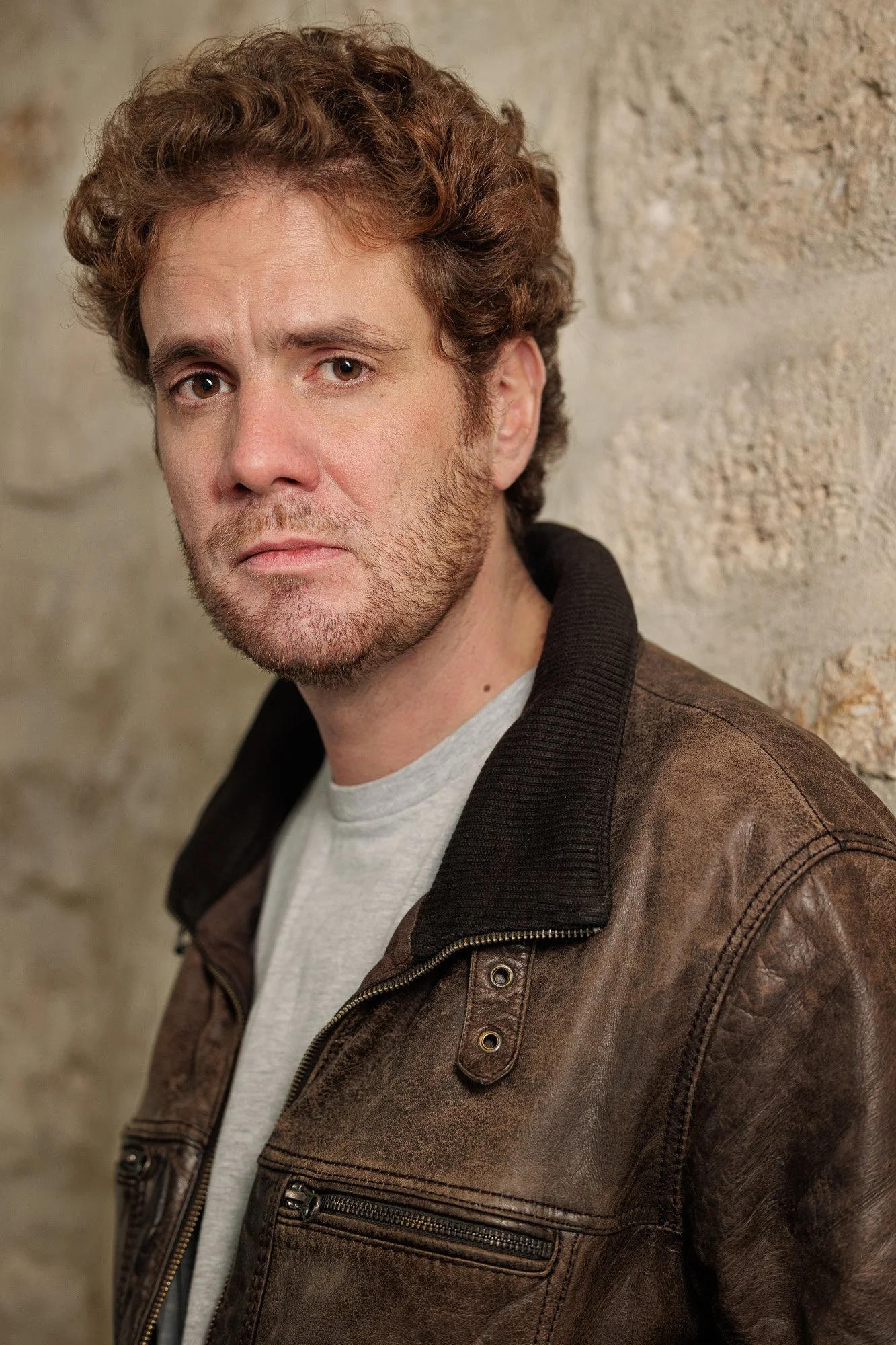
Who Is Niccolò Rigutto
Niccolò is a classically trained actor and theatre professional based between France and Italy. His work spans theatre performance, directing (réalisateur), and teaching at the Schola Cantorum, one of Europe’s respected institutions for dramatic arts. He is also a pianist — a discipline that quietly informs his sense of rhythm, restraint, and inner listening.
Grounded in the classics yet open to contemporary expression, Niccolò brings depth and precision to his craft. Even so, like many actors offstage, he wasn’t naturally inclined to “pose” in front of a camera. He arrived a little nervous, willing and slightly cautious about what we’d make together.
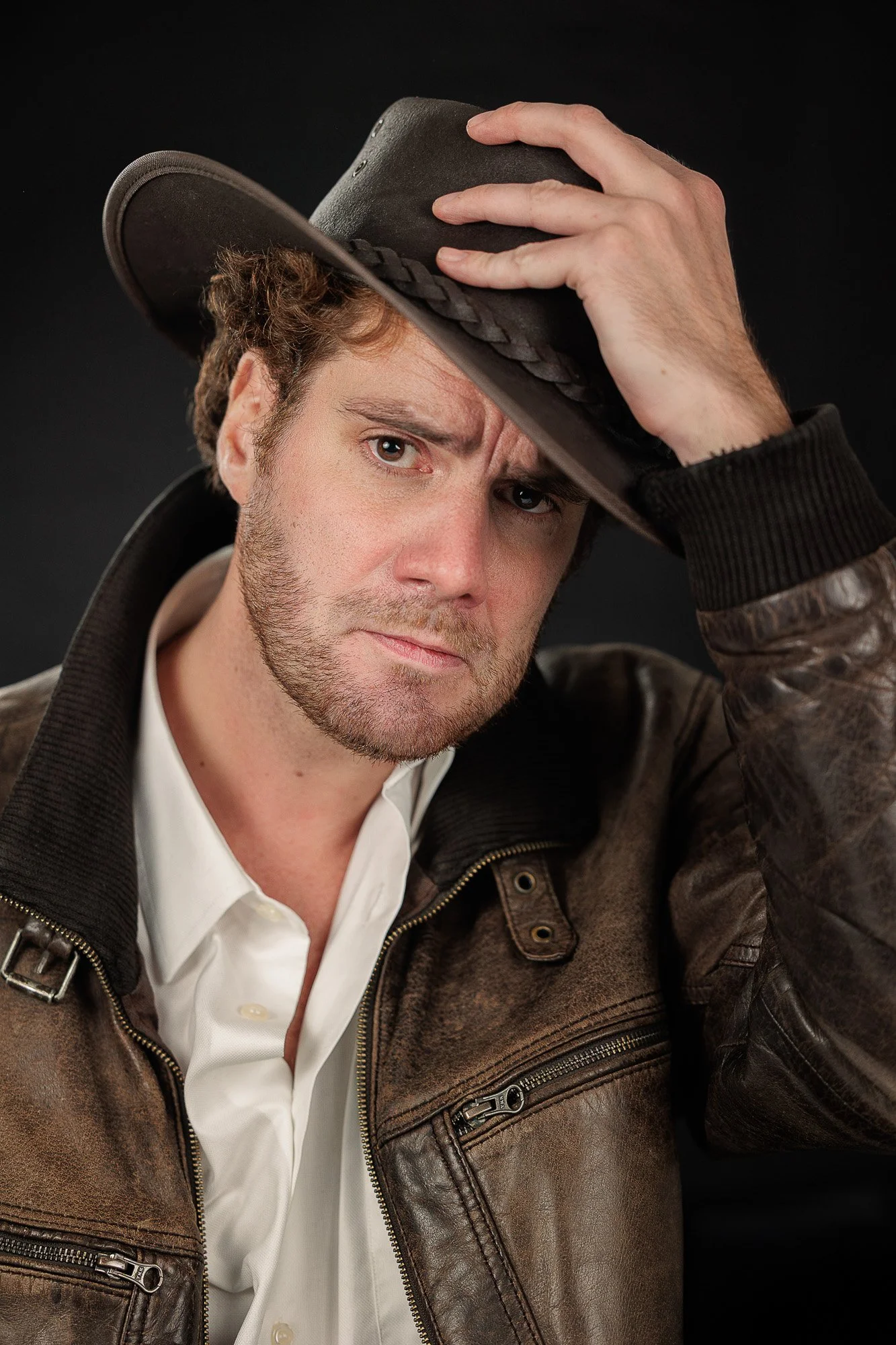
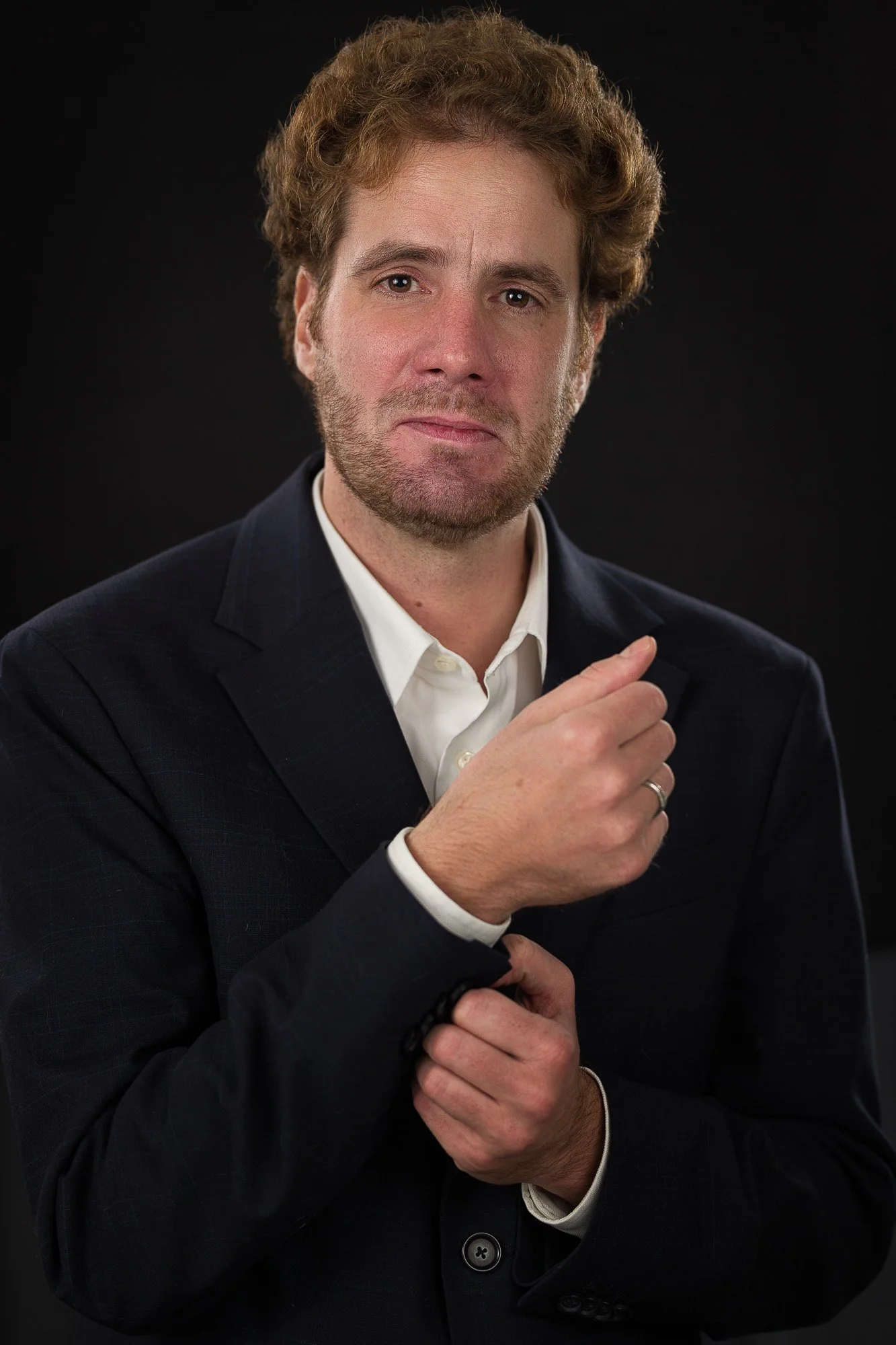
Seeing the Actor in Stillness
The very first time I met Niccolò, I had a striking insight into the nature of a true professional actor. I walked into a rehearsal where he was guiding two students through a scene from Molière’s Le Misanthrope — specifically the exchange between Alceste and Oronte.
To help the students, Niccolò stepped in to play Philinte — Alceste’s friend with a small but pivotal part in the scene. He was standing at the foot of a few stone steps, waiting for his entrance.
And in that moment, even before he spoke —
I didn’t see Niccolò anymore.
I saw Philinte.
His posture, his energy, the way his weight was set — all of it expressed character without a single line delivered. The actor wasn’t performing; he was being.
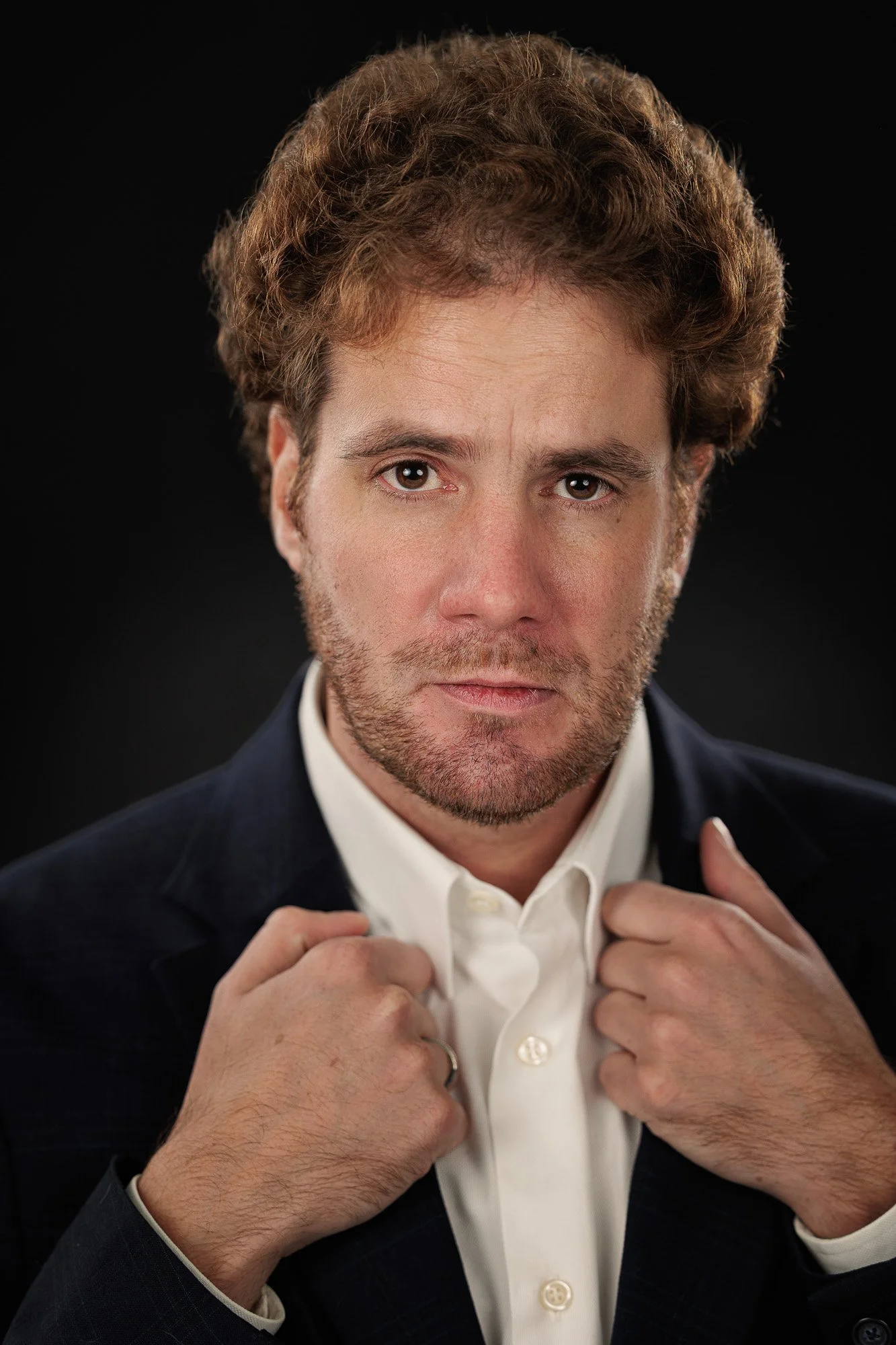
The Heavy Lifting of Portraiture
Most of us are completely unaware of who we are. We are our own worst judges. We see flaws first. We flinch at angles that don’t align with how we feel inside.
As a photographer, I try — to the best of my ability — to help someone see themselves differently. Not through filters or fantasy, but through honest light, careful direction, and the time it takes to let something real emerge. We never rush.
With Niccolò, it was about helping him see what I could already see: the quiet strength, the attentiveness, the depth that lives behind the eyes.
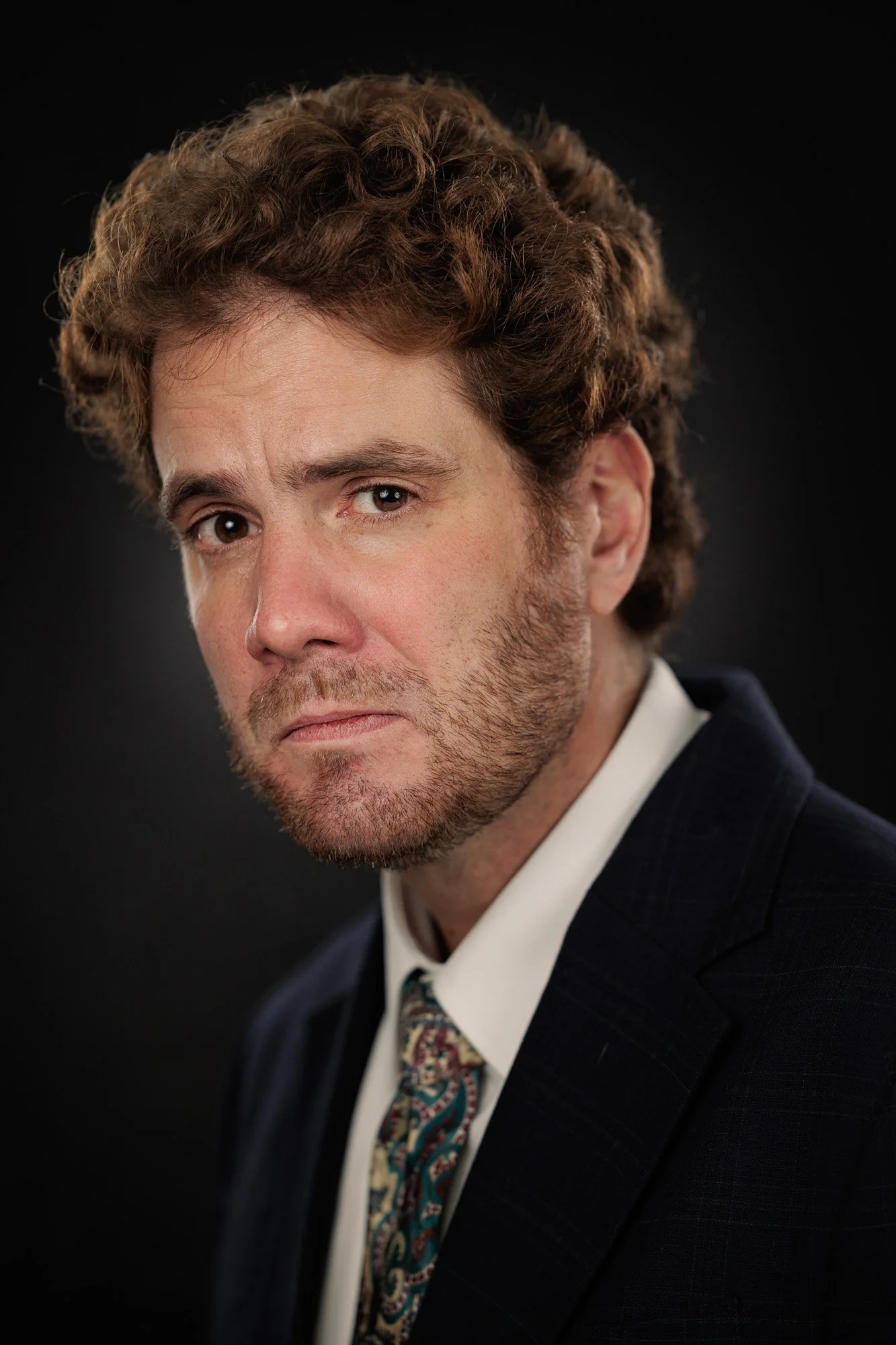
The Work — and the Result
The images here are the result of that collaboration: a talented actor and a photographer committed to revealing what is already there.
Some are introspective. Some are playful. All of them are real.
And that, ultimately, is what I love about portrait photography — the moment someone looks at a photograph and thinks:
“That’s me. And I don’t hate it.”
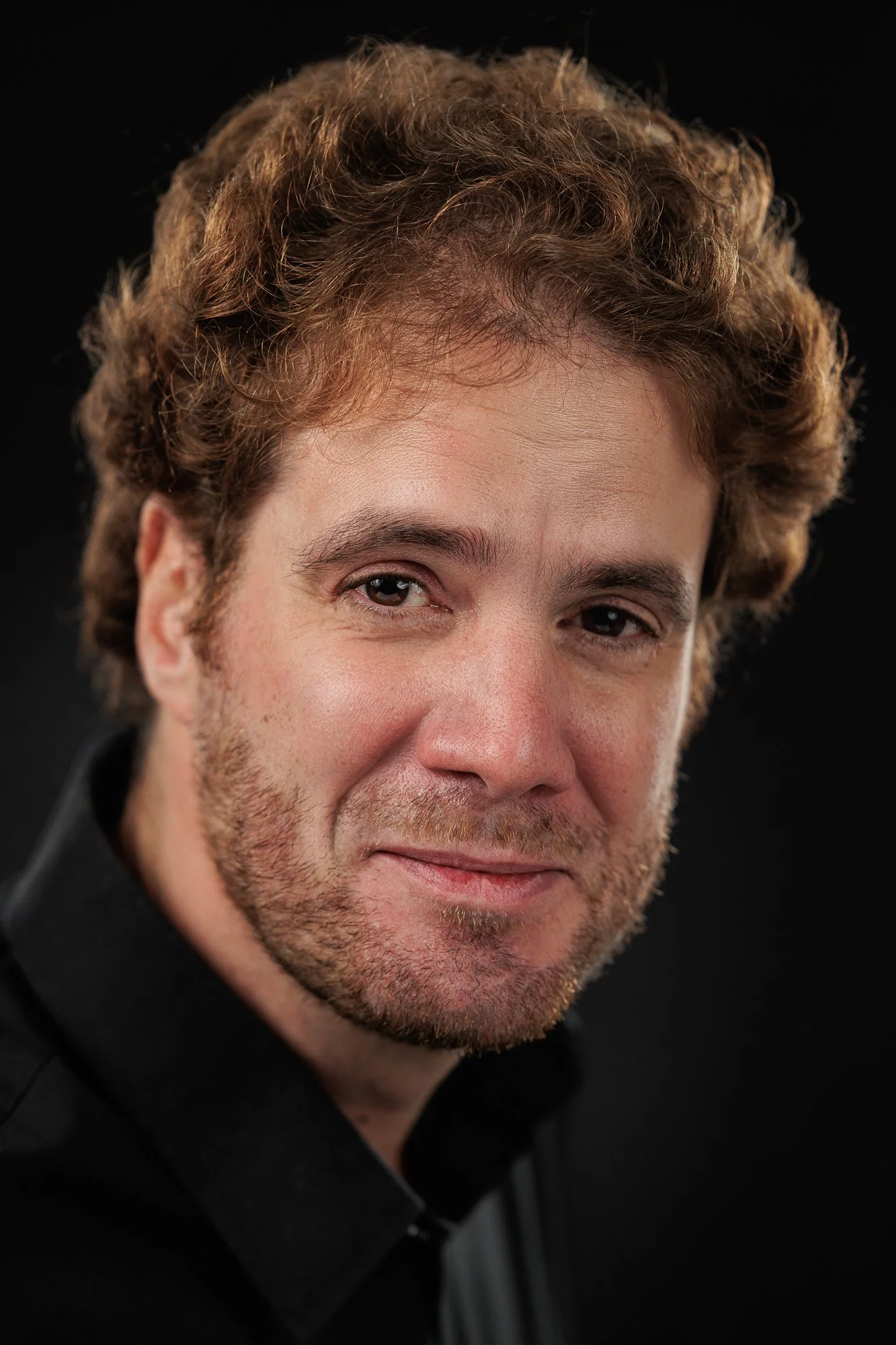
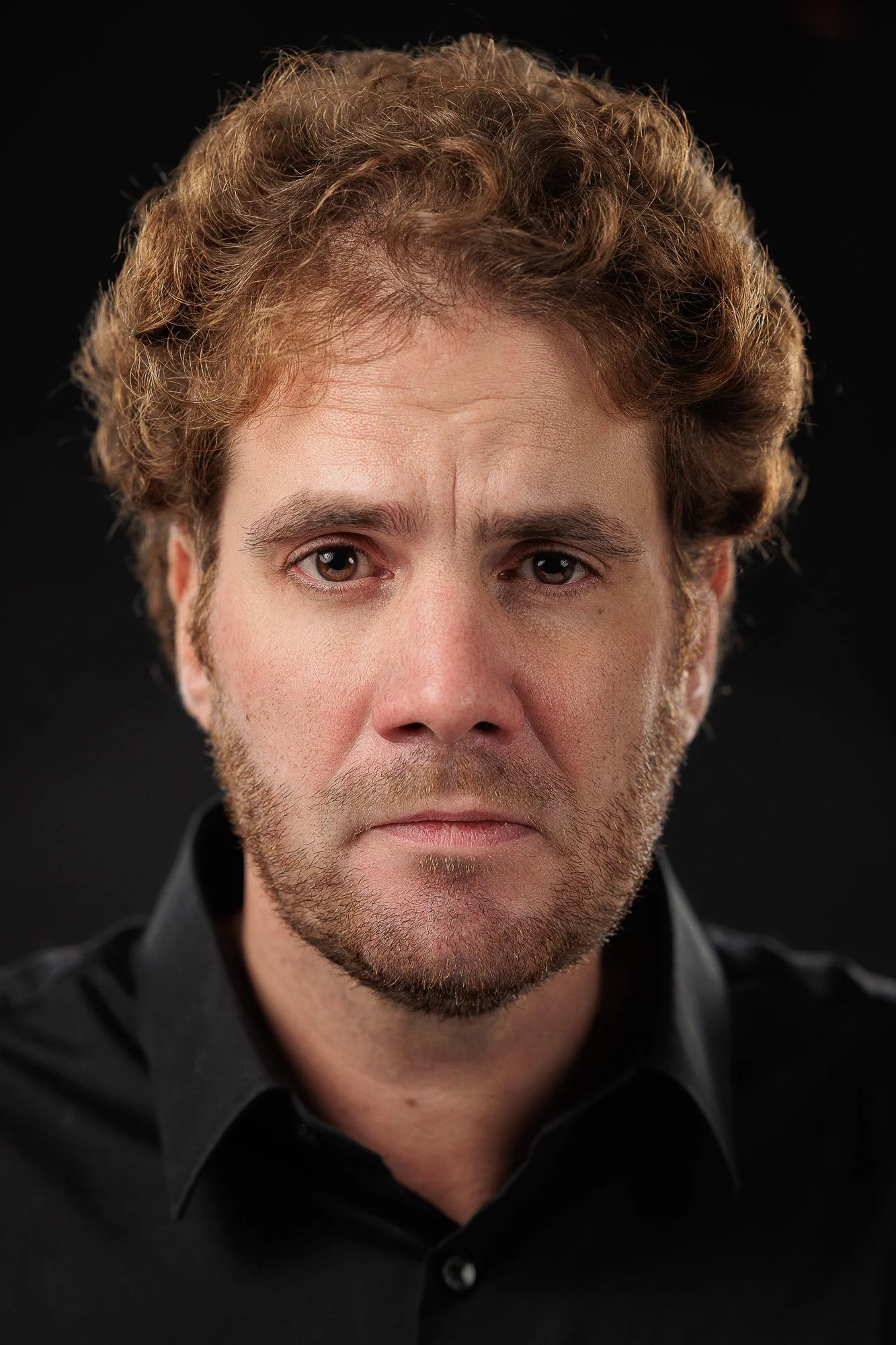
If this approach to portraiture resonates with you, you’re welcome to schedule a session below.
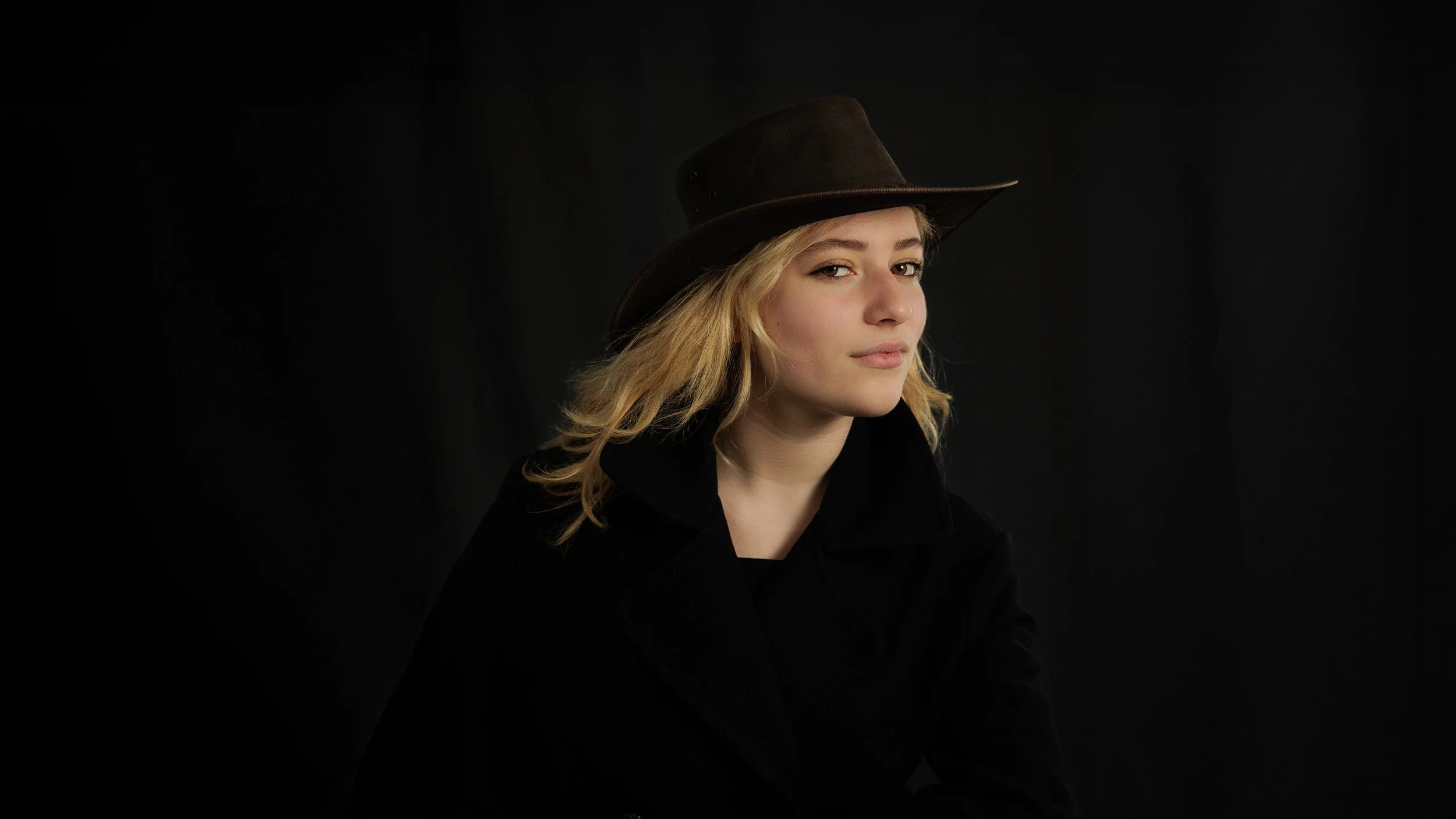
Photographing Hannah
A studio portrait session with actress Hannah C. in Paris. Through a calm, guided process, the session moved from direction to freedom, allowing confidence and presence to unfold naturally in front of the camera.
I met Hannah through a theatre class. She is a young actress, and over time the group formed a close, attentive working environment — one built on shared focus, generosity, and laughter. Photographing her grew naturally from that context of trust and presence.
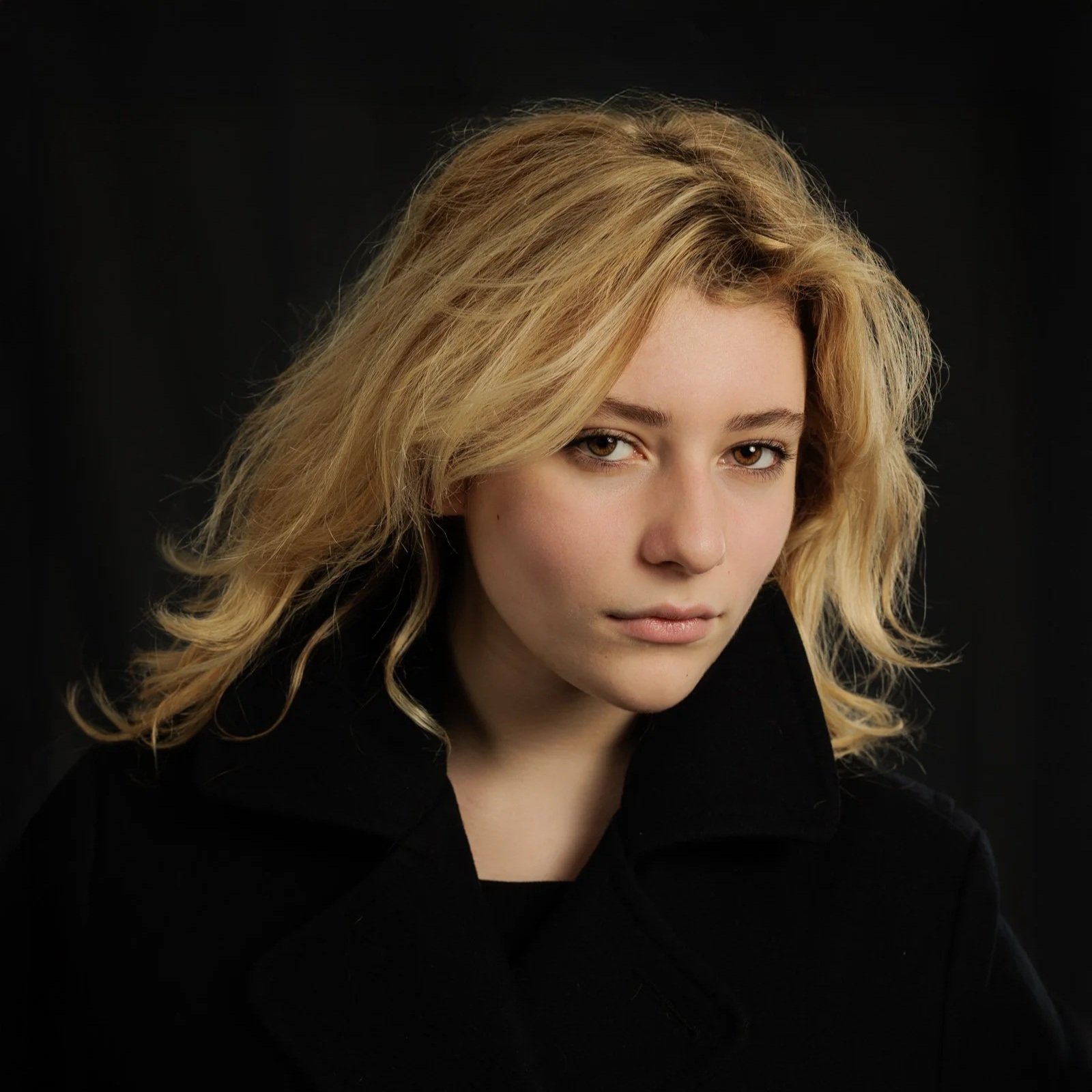
Hannah Castel-Chiche — studio portrait, Paris
Studio portrait photography was unfamiliar territory for her. That’s often the case, even for performers who are used to being on stage or on set. A portrait session asks for something different — less performance, more presence — and it takes a little time to settle into that.
At the beginning, I guided her closely: where to stand, how to place her body, how to relate to the light. Slowly, the atmosphere shifted. What started as direction became movement, and movement became play. At some point, she simply began to take the space in front of the camera on her own.
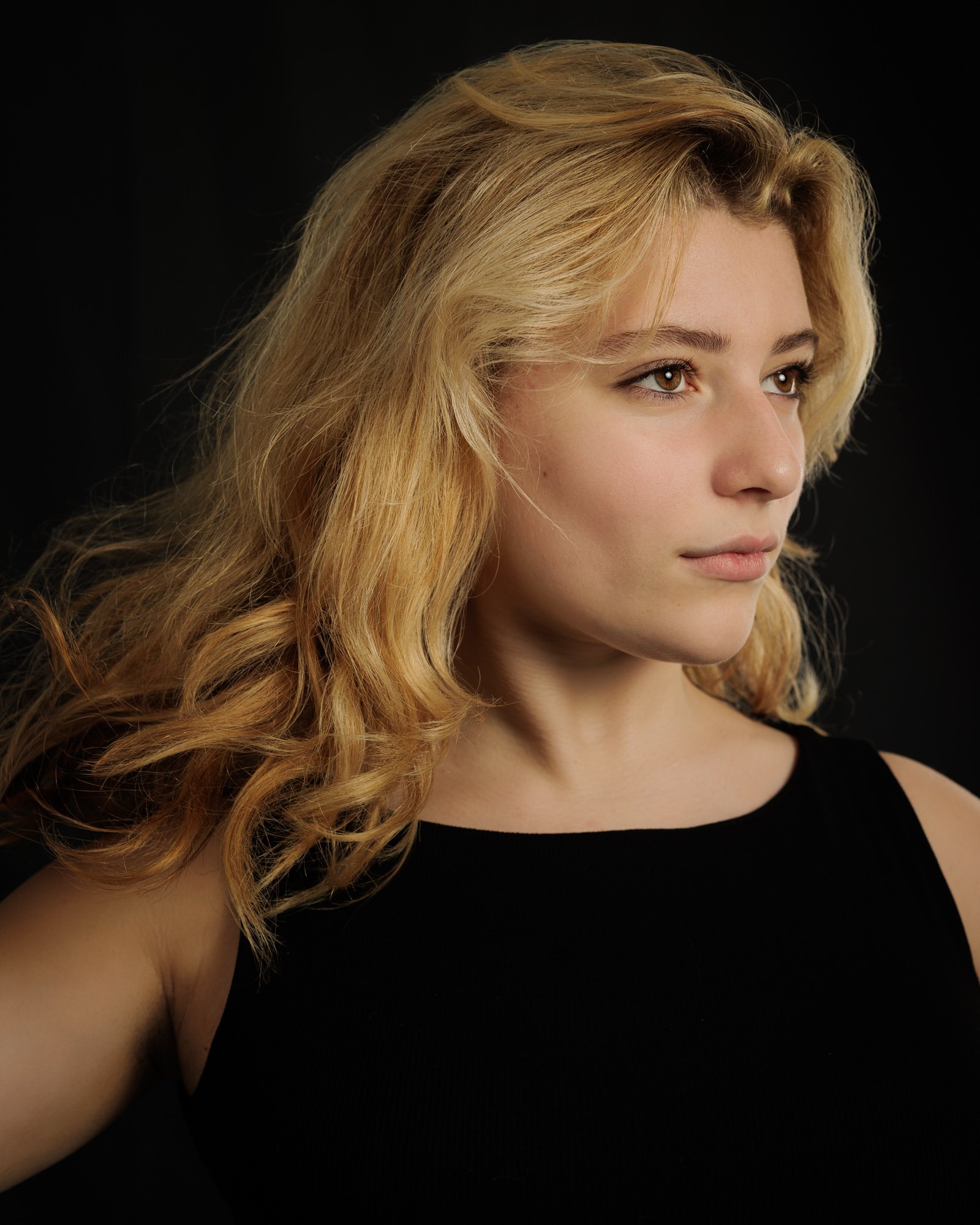
Profile studio portrait of actress Hannah Castel-Chiche, Paris
I photograph with the images visible as we go. It keeps the process open and shared. When Hannah caught sight of the screen and asked, taken aback, “Is that really me?”, the tone of the session changed again — lighter, more confident. From there, everything flowed more easily.
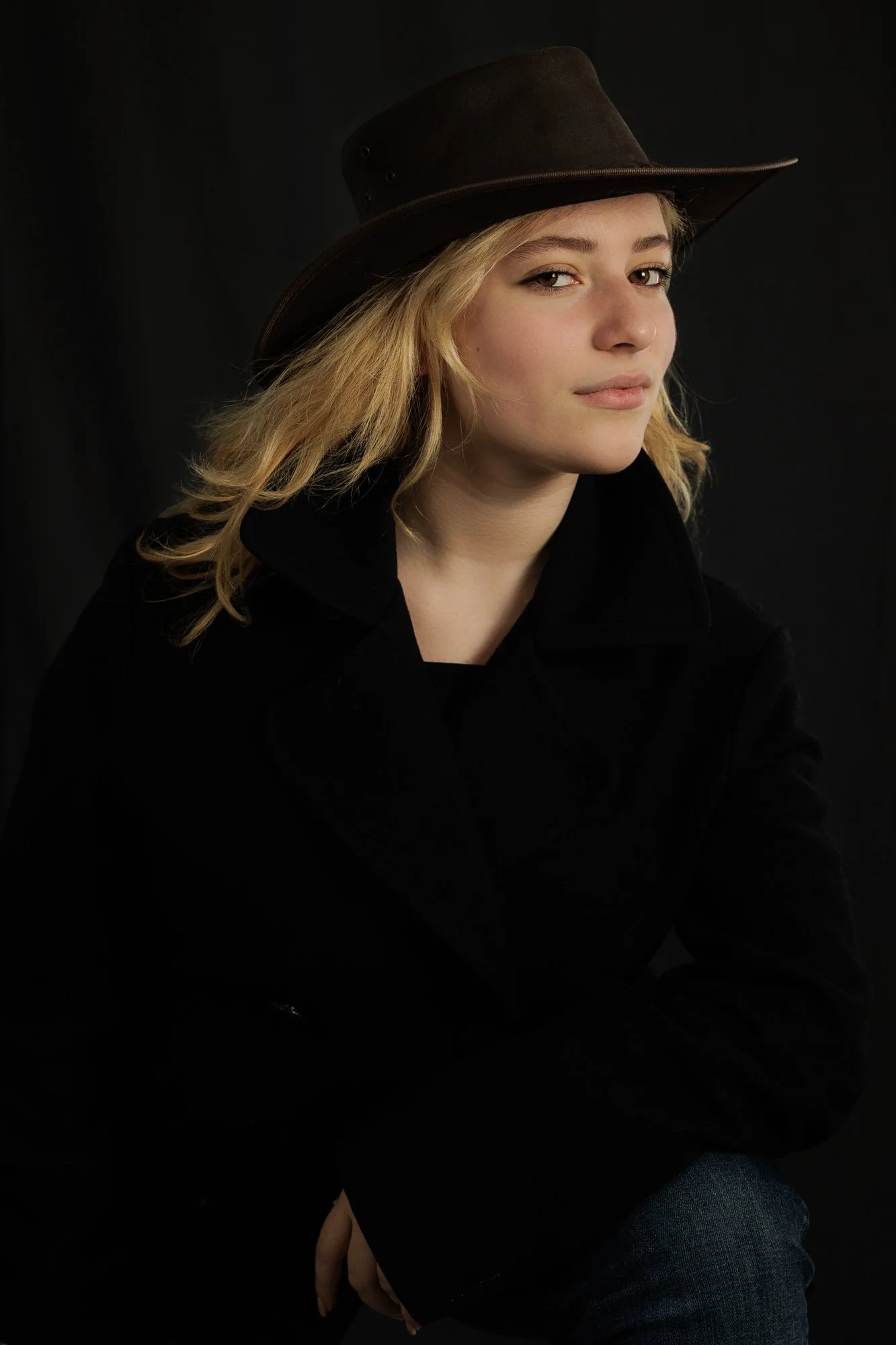
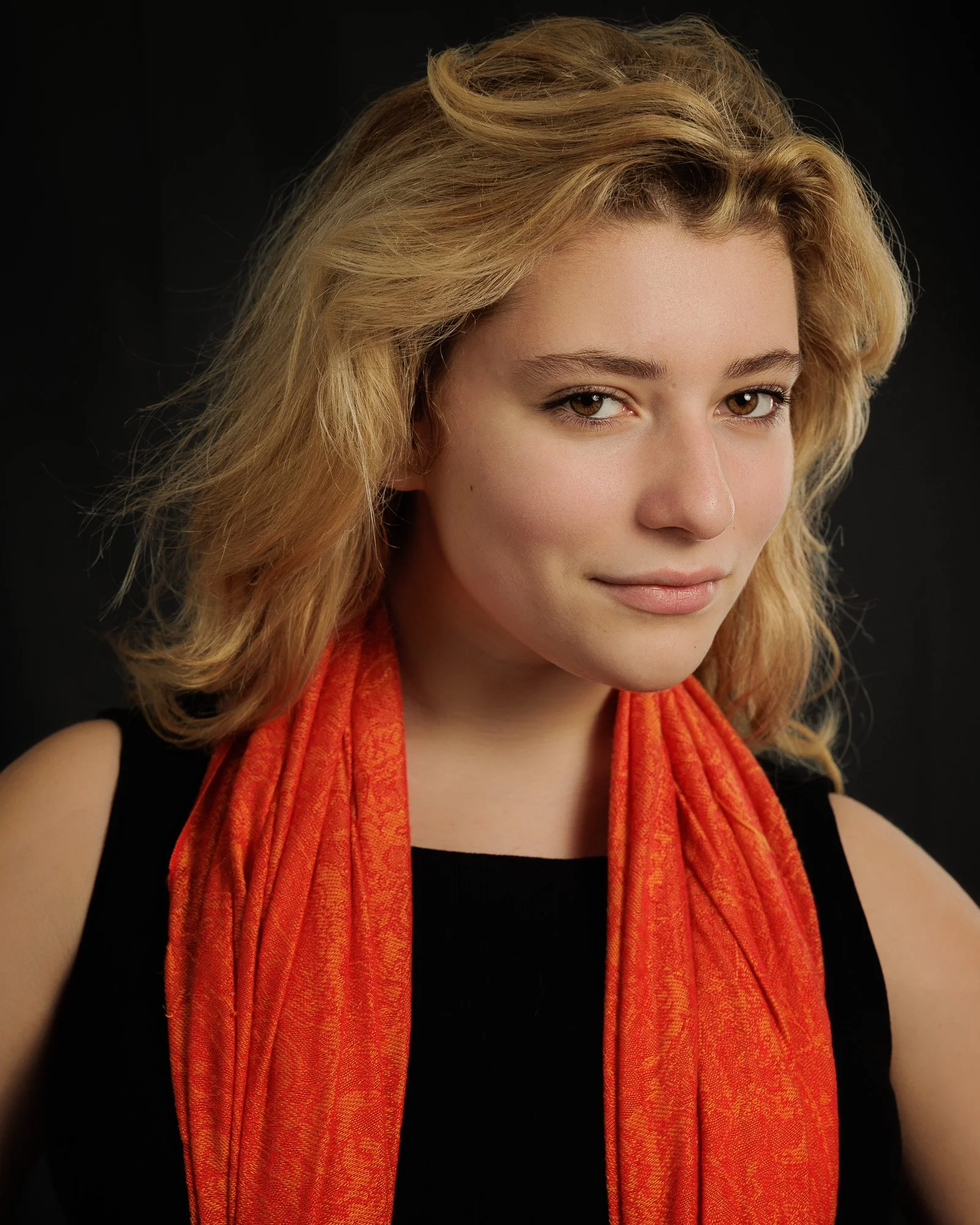
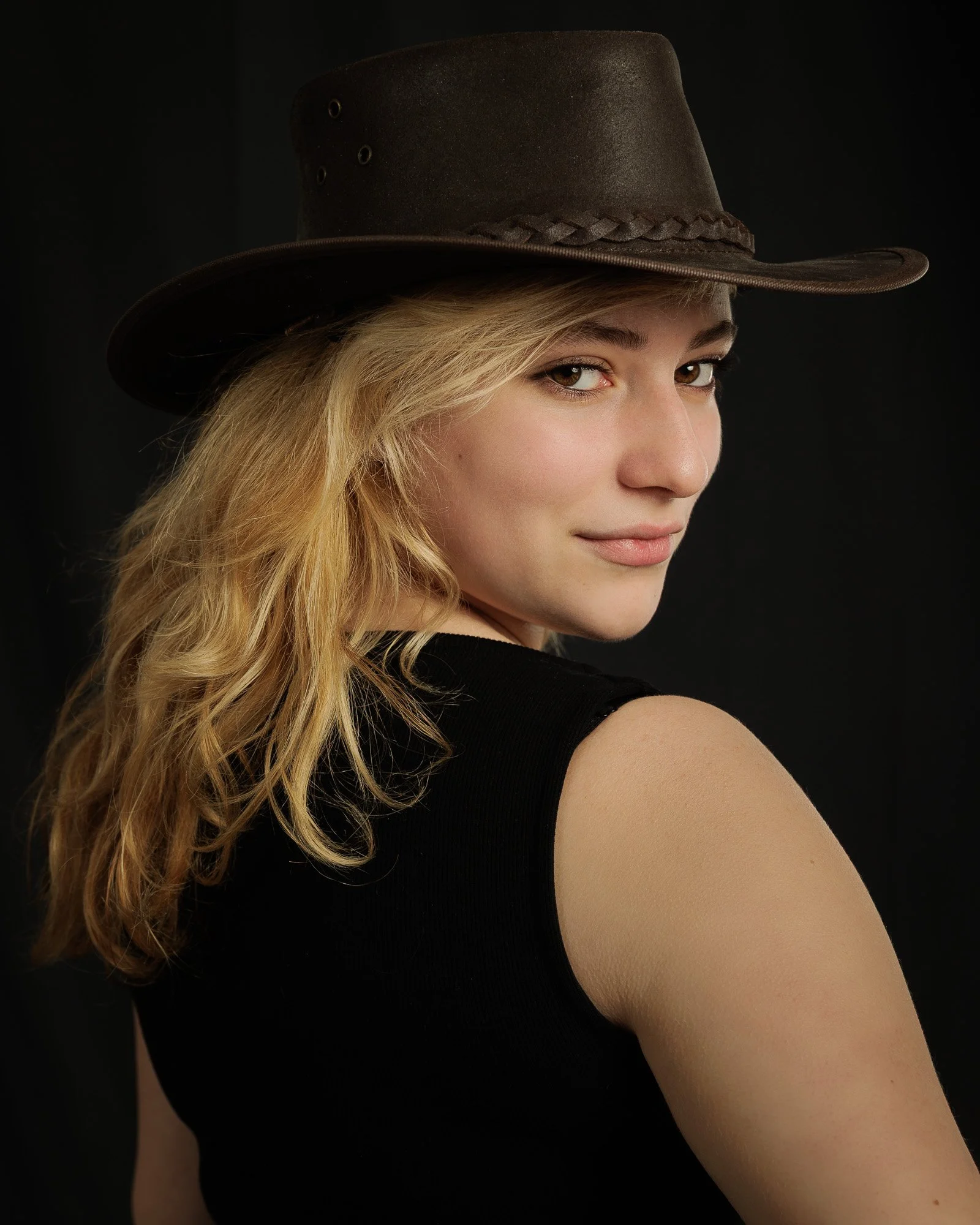
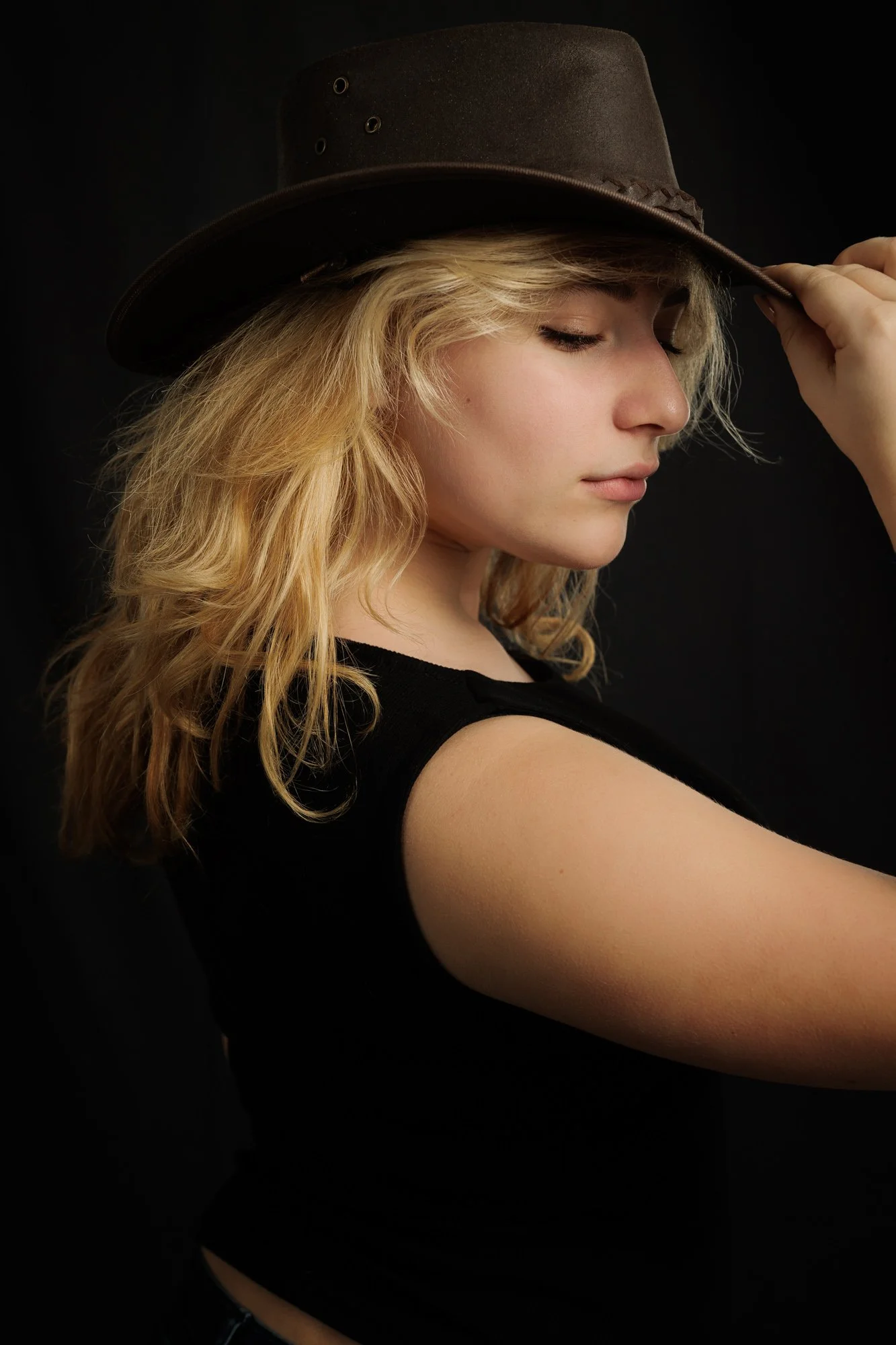
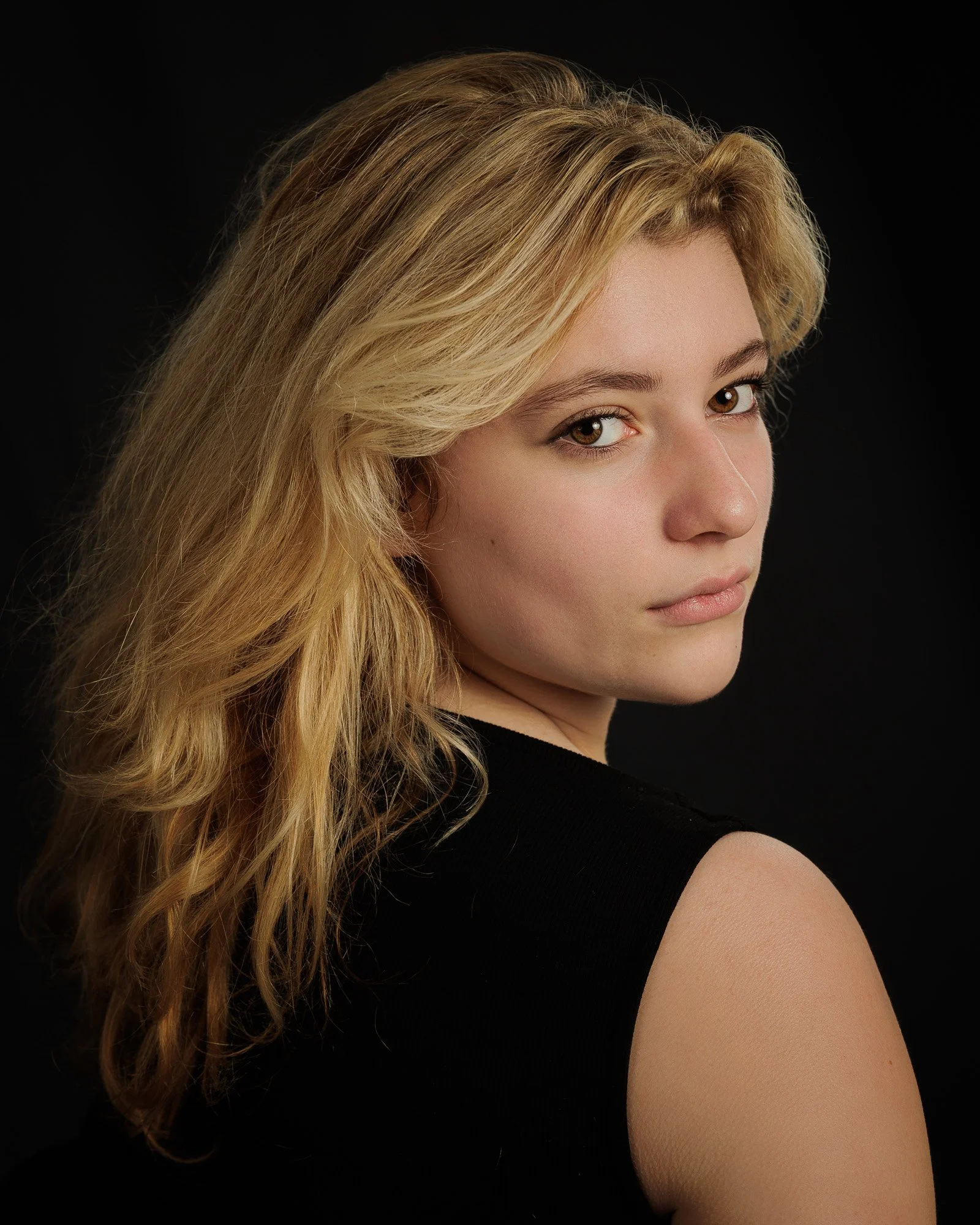
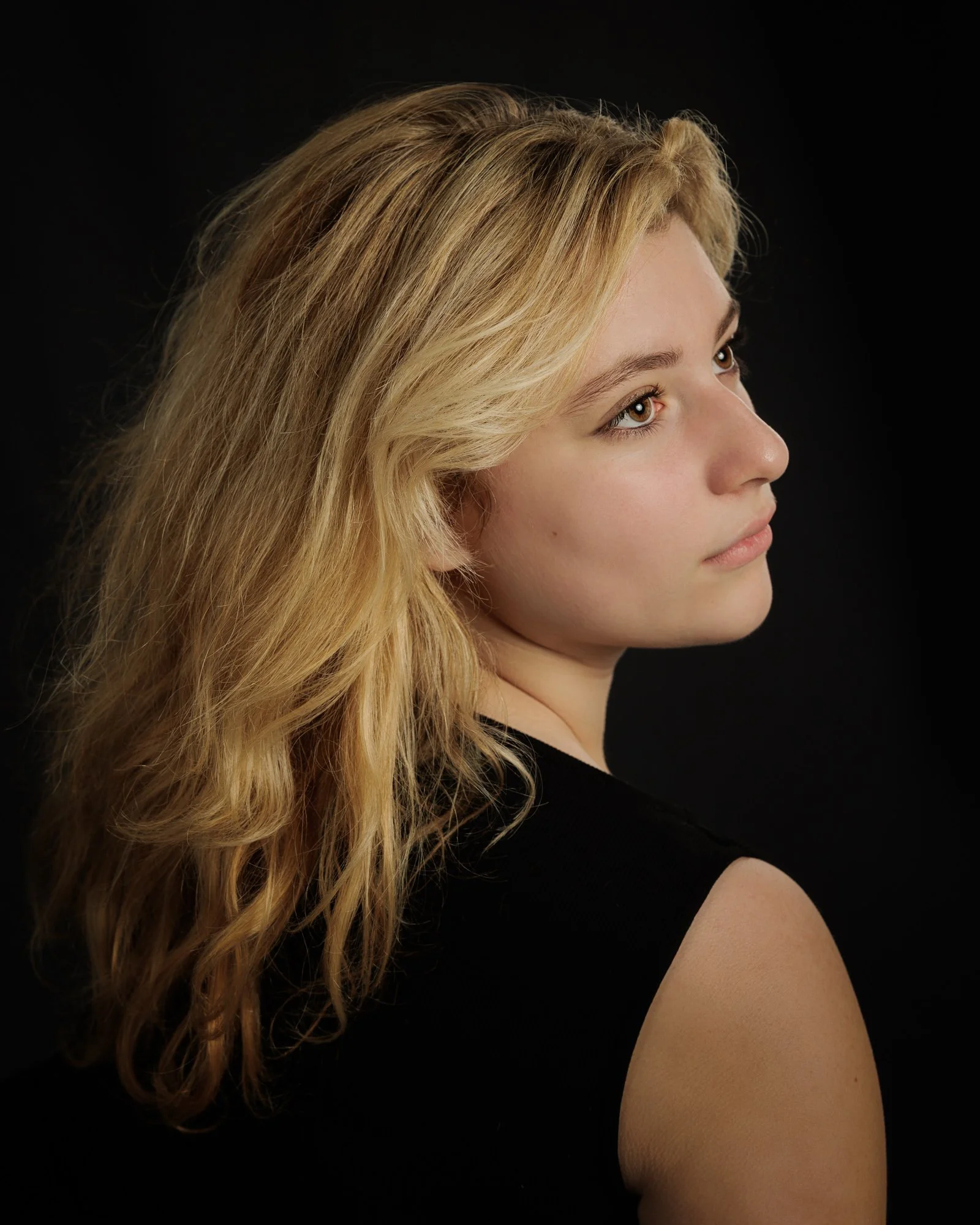
Of course, she is easy to photograph in a technical sense. But what mattered more was her openness once the pressure lifted — the moment when posing stopped and something more natural took its place.
These are the sessions I enjoy most: guided at first, then gently letting go. Calm, attentive, and, when it happens, quietly joyful. The studio is simply the space that allows that to unfold.
My Journey in Museum Photography Begins at the École du Louvre
From the École du Louvre to photographing for the Musée d’Orsay, my journey has been shaped by light, history, and fragile works of art. This post reflects on the path from student to professional photographer, working with museums, galleries, and private collections.
Caroline Coyner in front of the Petit Palais, Paris — where my journey in museum photography continues.
Four years immersed in art history and museology at the École du Louvre, learning how to preserve what time and light inevitably damage.
Then come the hands-on experiences. At Azay-le-Rideau, I guide visitors in French and Italian. Between tours, I photograph the tapestries tirelessly — kept in semi-darkness to protect their colors.
At Versailles, while leading tours through the groves, I discover the fragility of the gilding on the fountains and the delicate painted details, like those on the Fountain of Flora, constantly threatened by wind and rain.
Later, working in an antiques gallery, I photograph every object for decorators and clients. The images remain flat, lifeless… until the day my employer lends me a Leica. Everything changes: the object seems to vibrate, to come alive. I realize this is where I belong — searching for the “preferred profile” of each piece, just as one does with a portrait.
Detail of a bronze Buddha head — one of the many artworks I photograph with precision lighting and calibration to preserve texture and form.
After the gallery, I begin collaborating with antiques dealers — in New York, in Atlanta, even for a jeweler based in Miami.
I photograph their pieces for 1stDibs, for collectors, for designers. Each object becomes an exercise in precision: finding the angle that reveals the patina of wood, the transparency of crystal, the brilliance of an antique jewel.
These years give me valuable insight into the art market and the collector’s eye.
Antique sunburst mirror — photographed to reveal depth, patina, and the play of light across gilded surfaces.
Life then brings me back to France. My parents need me, and I decide to return to care for them.
Everything shifts: I have to reinvent my clientele, rebuild a network, find my place here again.
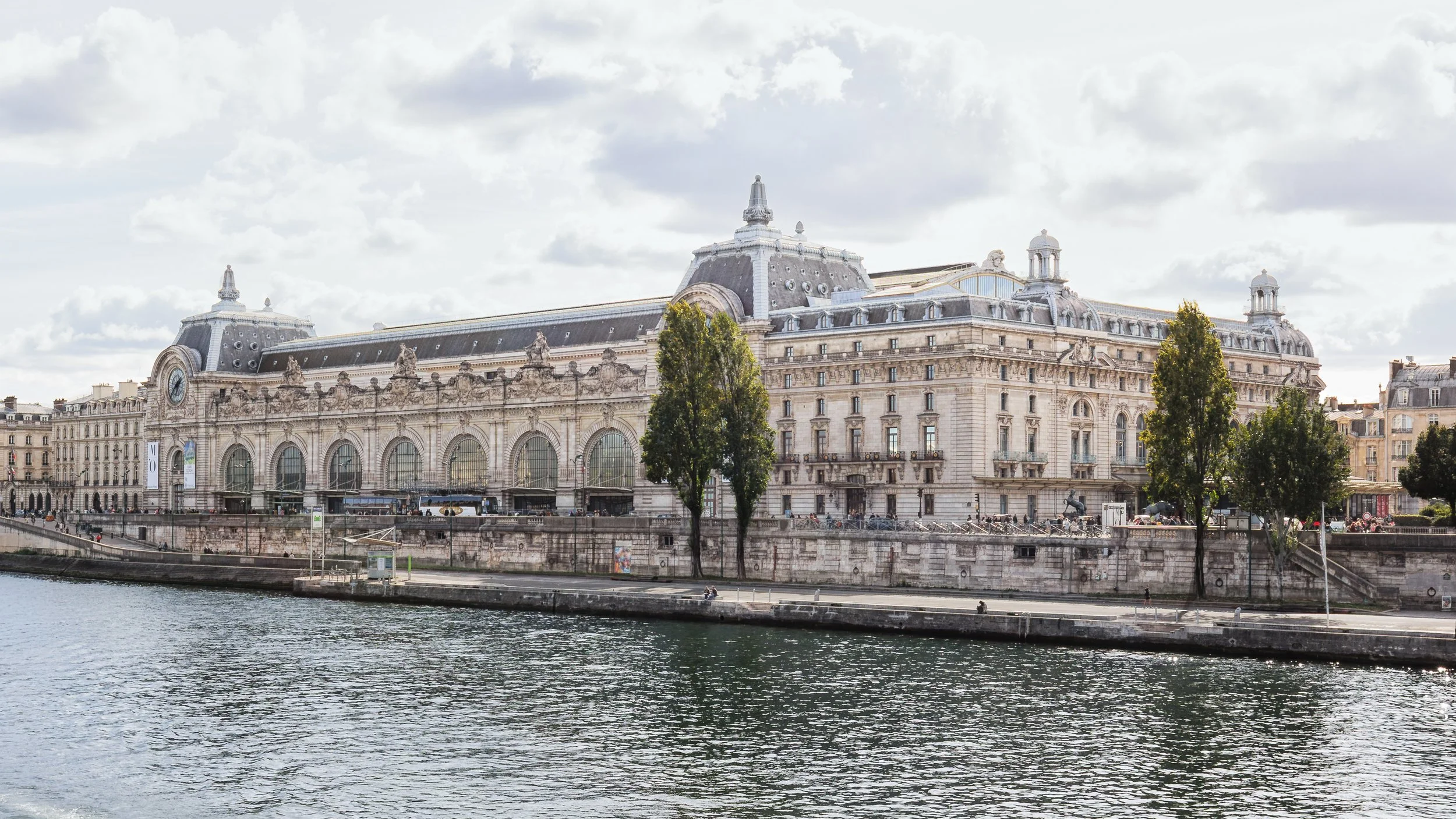
It’s in this context that an unexpected opportunity arises. The Musée d’Orsay, preparing its major Caillebotte exhibition in collaboration with the Getty and the Art Institute of Chicago, entrusts me with photographing a number of works directly in the homes of private collectors.
These photographs are later published in the exhibition catalogues.
Catalogue for the Caillebotte exhibition at the Musée d’Orsay, created in collaboration with the Getty and the Art Institute of Chicago, featuring my photography.
Other projects follow: Berthe Weill (commissioned by the Musée d’Orsay for the Orangerie), Harriet Backer, Hans Berggruen, Troubetzkoy…
Today, several catalogues and exhibition books include my photographs. Each time, the feeling is the same: contributing to transmit art to the public while respecting the fragility of the works.
Photographing a work of art is never just pressing a shutter. I arrive with a small traveling studio: the light, the calibration tools to keep the colors accurate, everything needed to work independently.
With my husband, who assists me, we work as two, which makes things simpler and smoother. In a collector’s home, we know how to be present without intruding, to respect the intimacy of the house, to adapt to narrow rooms. In a museum, it’s the same spirit: going quickly, without haste, to respect the rhythm of the place and the fragility of the works.

Exhibition catalogues including my photographs, published by the Musée d’Orsay, the Musée de l’Orangerie, and international institutions.
For me, photographing for museums, galleries, or private collectors is about making visible the fragile beauty entrusted to me.
If you would like your works to be captured with this same attentive eye, I would be glad to talk with you.
See more of my work in the portfolio, or contact me to discuss photography for your museum, gallery, or collection.

Caroline Coyner photographing for museums, galleries, and private collectors — adapting to each space while respecting the fragility of the works.